
What Is Editorial Automotive Photography: A Photographer’s Guide
June 5, 2026
Editorial automotive photography is defined as a storytelling-driven genre where images support a written narrative about vehicles and car culture rather than directly selling a product. Unlike commercial car photography, which exists to move units off a lot, editorial work appears in magazines, online features, and automotive journals to illustrate ideas, events, and cultural moments. Publications like Road & Track, Motor Trend, and Car and Driver rely on this genre to give readers a visual experience that matches the story on the page. Understanding what separates editorial from other types of car photography is the foundation every serious automotive photographer needs before picking up a camera.
What is editorial automotive photography and how does it differ from other types?
Editorial automotive photography is validated by its assignment context. Images accompany a narrative for editorial publications, with environment-led framing and a documentary storytelling style that prioritizes authenticity over product promotion. The industry term most closely aligned with this practice is automotive photojournalism, though editorial photography for cars covers a broader creative range that includes feature spreads, cultural profiles, and lifestyle narratives.
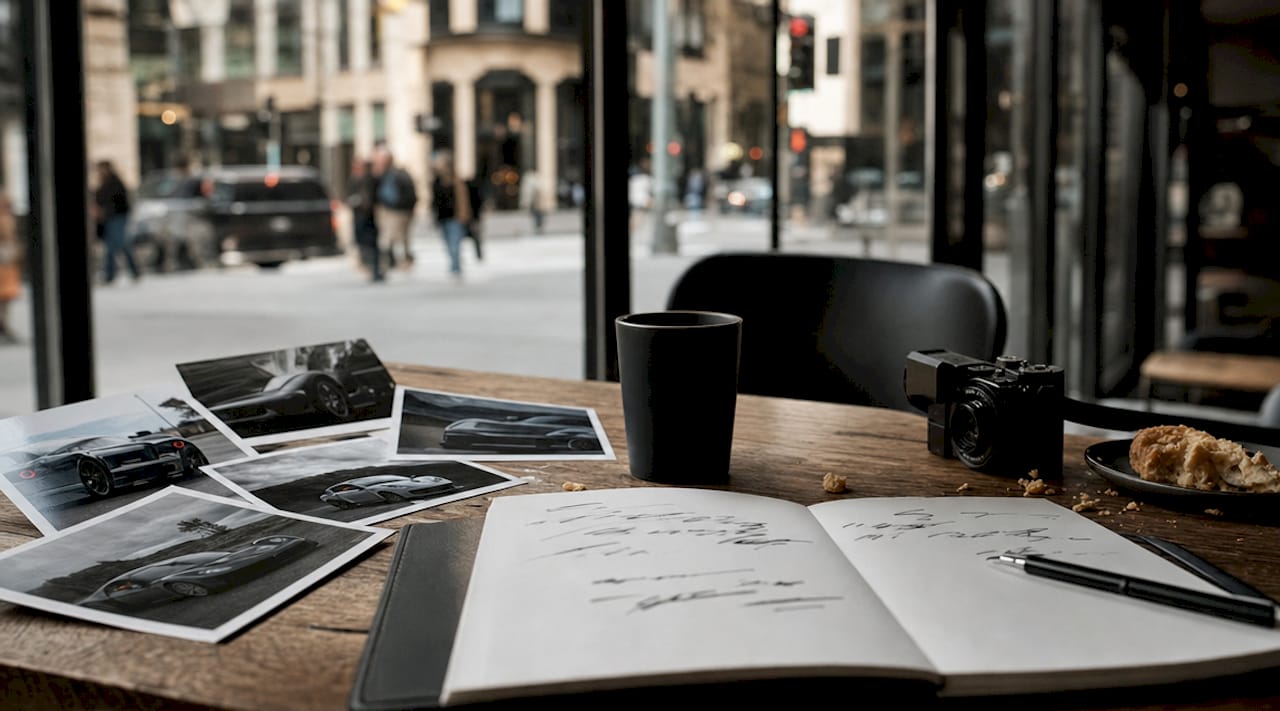
The clearest way to understand the genre is to compare it directly against the other major types of car photography.
| Type | Primary purpose | Setting | Creative control |
|---|---|---|---|
| Editorial | Illustrate a story or idea | Authentic, location-driven | Photographer and editor |
| Commercial | Sell or advertise a vehicle | Studio or controlled outdoor | Client-directed brief |
| Stock | Provide generic, licensable images | Neutral or generic | Photographer only |
| Social/Lifestyle | Build brand identity online | Varied, trend-driven | Brand or influencer |
The table makes the distinction concrete. Commercial photography follows a client-imposed brief where every shadow and reflection is approved before the shutter fires. Editorial work operates differently. The photographer and editor collaborate around a narrative concept, and the resulting images serve story communication through tailored composition, lighting, and context rather than a sales objective.
This creative freedom is both the appeal and the challenge of editorial work. You are not simply making a car look beautiful. You are making it mean something within the context of a larger story.
Key techniques that make editorial automotive photography work
The technical decisions in editorial automotive photography flow directly from the narrative intent. Choosing your photographic intent first guides every downstream decision on lighting and composition, which is why photographers who skip the concept phase consistently produce images that look technically correct but feel emotionally empty.
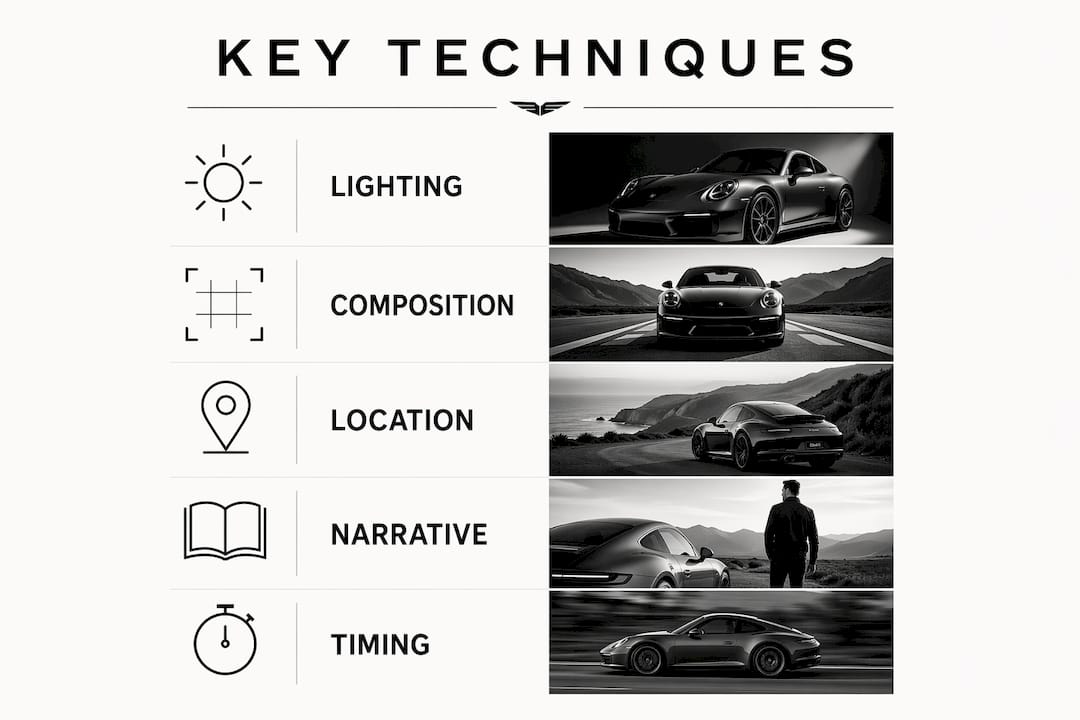
Natural and cinematic lighting is the most powerful tool in this genre. Golden hour, roughly 30 minutes before sunset, produces warm, directional light that wraps around body lines and creates depth without artificial fill. For a Lamborghini Huracán shot against the Nevada desert, that amber light does more narrative work than any studio softbox ever could.
Environmental leading lines are equally critical. Roads, shadows, architectural edges, and horizon lines all pull the viewer’s eye toward or through the vehicle. When these lines are used deliberately, the car stops being an object sitting in a frame and becomes part of a living scene.
Here are the core techniques that separate strong editorial automotive work from generic car photography:
- Use location-specific light rather than fighting it with artificial sources
- Frame the car within its environment, not in front of it
- Allow natural imperfections like lens flare, dust, or motion blur when they serve the mood
- Shoot at multiple focal lengths to vary the relationship between car and environment
- Prioritize the emotional tone of the scene over technical sharpness when the two conflict
Pro Tip: Shoot a location without the car first. Walk the space, identify where the light falls, and mark two or three positions where the environment tells its own story. Then bring the car into those positions rather than placing it arbitrarily and hoping the background cooperates.
Composition that supports a narrative role for the vehicle is what separates editorial automotive photography from a well-executed car portrait. A Ferrari 296 GTB photographed at the entrance of a Modena factory gate tells a story about heritage and origin. The same car photographed in a parking garage tells nothing.
How to plan and execute an editorial automotive photoshoot
Pre-production for editorial automotive shoots is more intensive than commercial work because narrative cohesion demands it. Location scouting alone can take days, and thematic planning must build what photographers call a “narrative universe,” where every visual element reinforces the story concept.
Here is a practical workflow for planning and executing an editorial shoot from concept to final frame:
- Develop the story concept first. Identify what the vehicle represents within the narrative. Is it a symbol of speed, heritage, rebellion, or luxury? The answer shapes every subsequent decision.
- Research the vehicle’s cultural and geographic origins. An Alfa Romeo 4C photographed near Roman architecture gains narrative weight that a neutral backdrop cannot provide. Culturally relevant settings strengthen editorial impact measurably.
- Scout locations before the shoot day. Visit at the same time of day you plan to shoot. Photograph the light, note the angles, and identify potential obstacles like foot traffic or construction.
- Build a shot list aligned with the editorial brief. Work with the editor or art director to understand which moments in the story need visual support. A feature on a car’s track performance needs different images than a profile of its owner.
- Select gear for the narrative, not for prestige. A 70-200mm f/2.8 lens compresses background elements and isolates the vehicle within its environment. A 24mm or 35mm wide-angle places the car inside the scene. Both serve different editorial purposes.
- Plan for contingencies. Weather, traffic, and light changes are constants in location shooting. Identify a backup position for every primary shot.
Pro Tip: Bring a printed reference sheet of your shot list and location sketches to every shoot. When light changes fast at golden hour, you cannot afford to scroll through your phone looking for notes. Physical references keep you moving.
Collaboration with clients and editors during pre-production prevents the most common failure in editorial automotive photography: beautiful images that do not match the story. The photographer’s job is not to create art in isolation. It is to create images that serve a narrative someone else is writing.
How authenticity and cultural context define editorial automotive imagery
Photographer Mirko Westerbrink, known in the industry as “Big Car Guy,” describes his approach as street-level honesty. His work mixes imperfection with precision-engineered machines to create emotional impact that polished commercial photography cannot replicate. That philosophy captures something true about what makes editorial automotive work resonate.
The genre succeeds when the car functions as a character connected to cultural context and environment. A Porsche 911 photographed on a rain-slicked Stuttgart street at dusk carries the weight of German engineering history. A classic Ford Mustang parked outside a Detroit diner in winter light carries something entirely different. Neither image is selling anything. Both are saying something.
Authenticity in editorial automotive photography shows up in specific, deliberate choices:
- Selecting locations with genuine cultural or historical relevance to the vehicle
- Allowing weather, texture, and environmental wear to appear in the frame
- Avoiding over-retouching that removes the sense of place and time
- Using analog techniques or film grain in post-processing to add tactile texture
- Letting the car’s relationship to its surroundings carry narrative weight rather than forcing the vehicle to dominate every frame
The deliberate combination of control and imperfection, such as film grain or analog textures, adds a human, street-authentic feel to luxury and performance automotive editorial images. This is not an accident or a technical shortcoming. It is a creative decision that separates photographers who understand the genre from those who are simply making cars look expensive.
“The tension between a perfectly engineered machine and an imperfect, lived-in world is where the most interesting automotive images live.”
That tension is the emotional core of editorial automotive photography. Luxury vehicles like the McLaren 720S or Bentley Continental GT are already visually extraordinary. The editorial photographer’s job is to place them in a world that makes them feel real rather than aspirational.
Key takeaways
Editorial automotive photography succeeds when the vehicle is treated as a character within a culturally relevant environment, with every technical decision serving the story rather than the product.
| Point | Details |
|---|---|
| Definition over aesthetics | Editorial automotive photography illustrates narratives for publications, not product sales. |
| Pre-production is non-negotiable | Days of location scouting and concept planning determine whether images serve the story. |
| Light drives narrative | Golden hour and environmental leading lines create cinematic depth that studio setups cannot replicate. |
| Authenticity over perfection | Intentional imperfection, analog texture, and cultural context create emotional resonance. |
| Gear follows intent | Lens choice and camera position should be determined by the narrative role of the vehicle, not personal preference. |
What 35 years behind the lens taught me about editorial automotive work
I have photographed luxury and performance vehicles for over 35 years, with work appearing on more than 550 magazine covers. The single lesson that took the longest to fully absorb is this: the car is never the subject. The story is the subject. The car is how you tell it.
Early in my career, I spent enormous energy making vehicles look technically perfect. Every reflection was controlled, every angle calculated for maximum visual impact. The images were technically strong. But the ones that got covers, the ones that editors called about, were almost never the technically perfect shots. They were the ones where something unexpected happened. A shaft of late-afternoon light hit a hood in a way I had not planned. A reflection in a rain puddle created a second composition I had not seen until I reviewed the frames. Those moments only happen when you are present in a location long enough to let the environment speak.
The trend I see accelerating in editorial automotive photography is a move toward deeper cultural specificity. Editors and readers are no longer satisfied with a beautiful car in a beautiful place. They want to know why that car belongs in that place. Photographers who can answer that question visually, without a caption, are the ones building careers in this genre. My advice to anyone developing their editorial style is to study the vehicle before you study the location. Know its history, its cultural associations, its design language. Then find the environment that makes all of that visible.
— Ray Baldino
See what editorial automotive photography looks like at the highest level
If you are serious about understanding editorial automotive photography in practice, the best education is studying work produced at the professional level for real editorial clients.
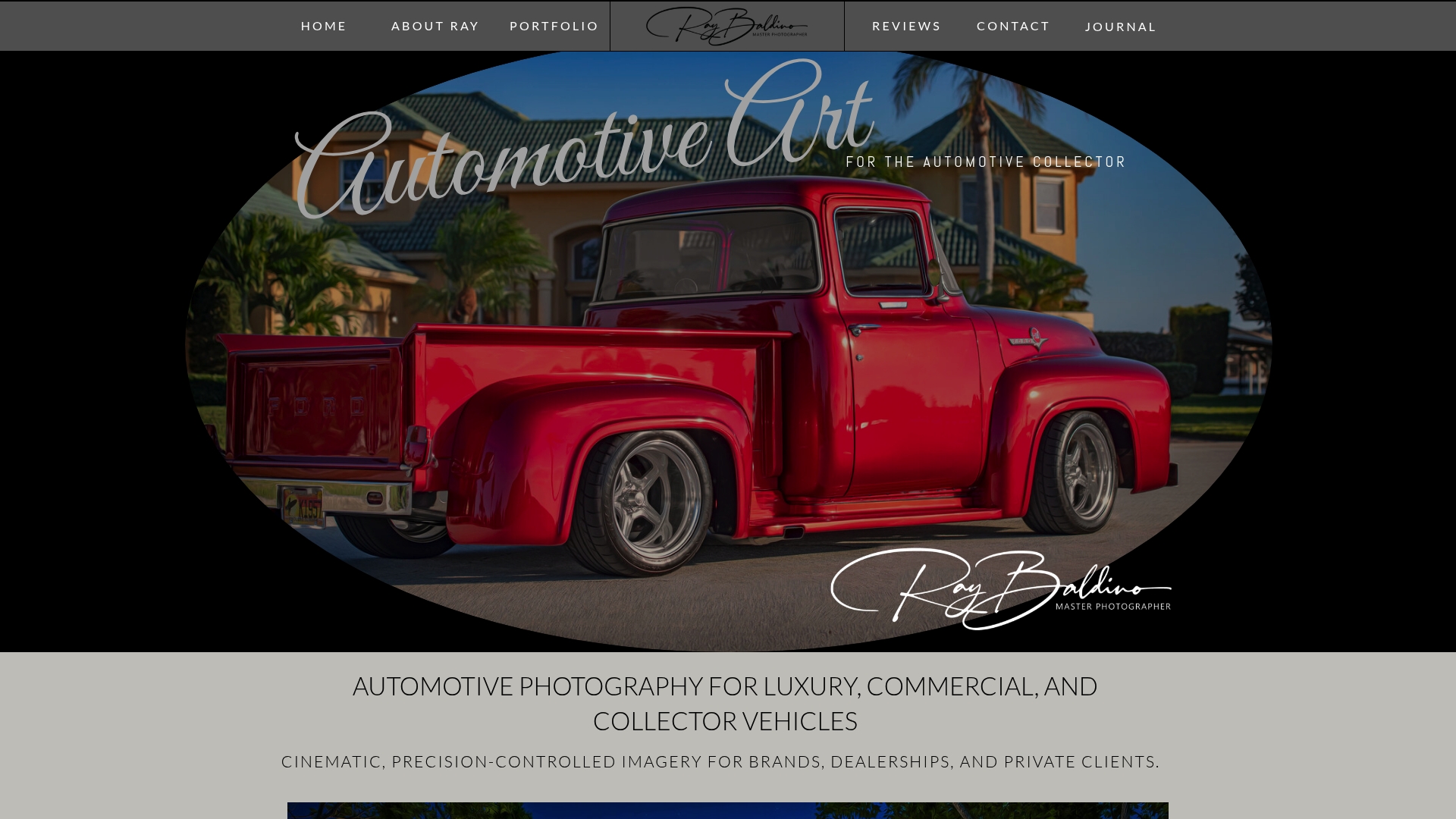
Baldinoautomotive has spent over three decades producing editorial and commercial automotive photography for luxury, exotic, and performance vehicles, with a portfolio spanning dealerships, private collectors, and major publications. Ray Baldino’s certification from the Professional Photographers of America and his record of over 550 magazine covers reflect a standard of technical and narrative execution that sets the benchmark for this genre. Whether you are looking for inspiration, a professional collaborator, or a reference point for your own editorial work, the Baldinoautomotive portfolio is worth your time. Explore the work and reach out directly to discuss your next project.
FAQ
What is the difference between editorial and commercial car photography?
Editorial photography supports a written narrative for publications and prioritizes storytelling over product promotion, while commercial photography follows a client brief designed to sell or advertise a vehicle. The creative control, setting, and purpose are fundamentally different between the two.
How long does it take to plan an editorial automotive shoot?
Location scouting alone can take several days for a single editorial shoot, with additional time required for concept development, shot list creation, and coordination with editors or clients. Thorough pre-production is what separates editorial work from a casual location shoot.
What camera gear works best for editorial automotive photography?
A 70-200mm f/2.8 lens compresses background elements and isolates the vehicle within its environment, while a 24-35mm wide-angle places the car inside the scene for environmental storytelling. Gear selection should follow the narrative intent of the shoot rather than a fixed formula.
Why do editorial automotive photographers use imperfection intentionally?
Mixing polished precision with natural imperfection creates emotional tension that resonates with viewers, a technique photographers like Mirko Westerbrink have built careers around. Film grain, analog textures, and environmental wear signal authenticity and make luxury vehicles feel connected to the real world rather than removed from it.
How does location choice affect editorial automotive photography?
Placing a vehicle in a culturally or historically relevant environment, such as Italian cars near Roman architecture, adds narrative weight that a neutral backdrop cannot provide. The location is not a background. It is part of the story.

