A former CIA officer, a life shaped by conflict, and a passion for performance cars. Joseph Assad’s story goes far beyond the driver’s seat.
Joseph Assad
Sometimes, you set out looking for a story. And sometimes, a story finds you.
Today, I signed up for a local car show benefiting our Sheriff’s Office. As I wandered among the cars, catching up with familiar faces and admiring the machines that brought everyone together, I turned to my friend Joe Rodriguez and asked a simple question.
“Is there anyone here you think would make a good subject for the Collector Series?”
Joe didn’t hesitate. He introduced me to Joseph Assad.
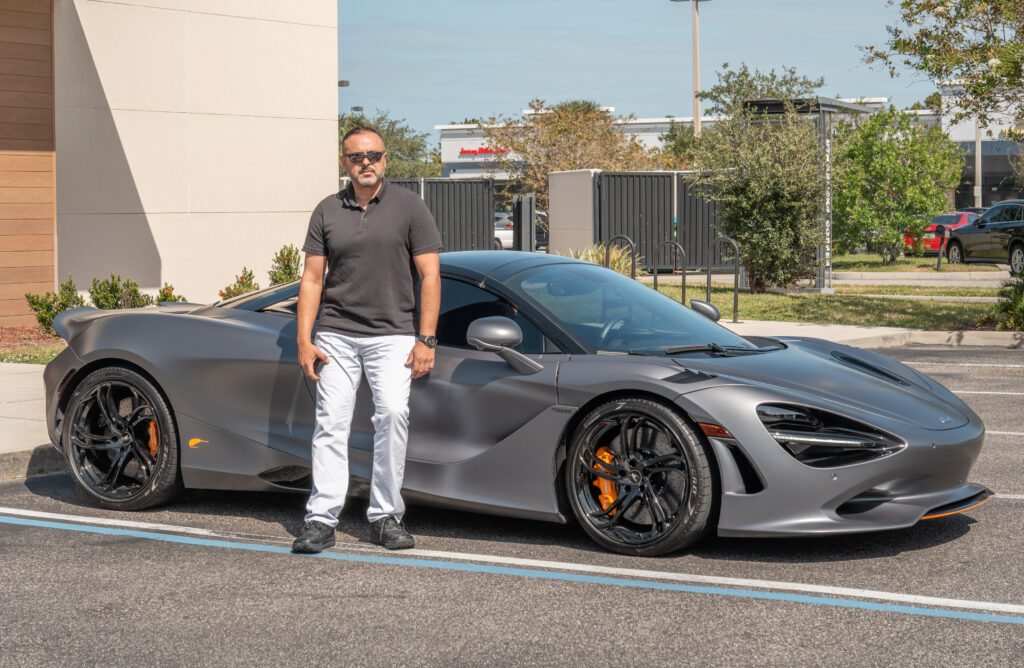
At first, it was just a conversation between two people who appreciate automobiles. I found myself admiring Joseph’s McLaren, and naturally, we began talking cars. Nothing unusual about that. It’s how so many of these conversations begin.
But as we talked, something unexpected happened.
Joseph began sharing pieces of his life. One detail led to another, and before long, we were talking about experiences that seemed a world away from the car show around us. He mentioned his intelligence career, a film project, and September 11, 2001—the morning a plane struck the Pentagon.
He told me he had been in Crystal City, Virginia, about a mile away, when the attacks unfolded. He heard the explosion, saw the smoke, and wanted to help, but the area was blocked off.
I sat listening, trying to take it all in. The stories kept coming, each one revealing another chapter of a life I could never have imagined from our casual introduction beside his McLaren.
Honestly, my jaw had dropped.
For a moment, I felt as though I had stumbled into a scene from a James Bond movie. Except this wasn’t a movie, and Joseph wasn’t a character someone had written. He was a man standing in front of me, telling me about his own life.
I had approached Joe Rodriguez looking for an interesting person to feature in the Collector Series. I hadn’t expected to meet someone whose story might take us so far beyond the cars that brought us together.
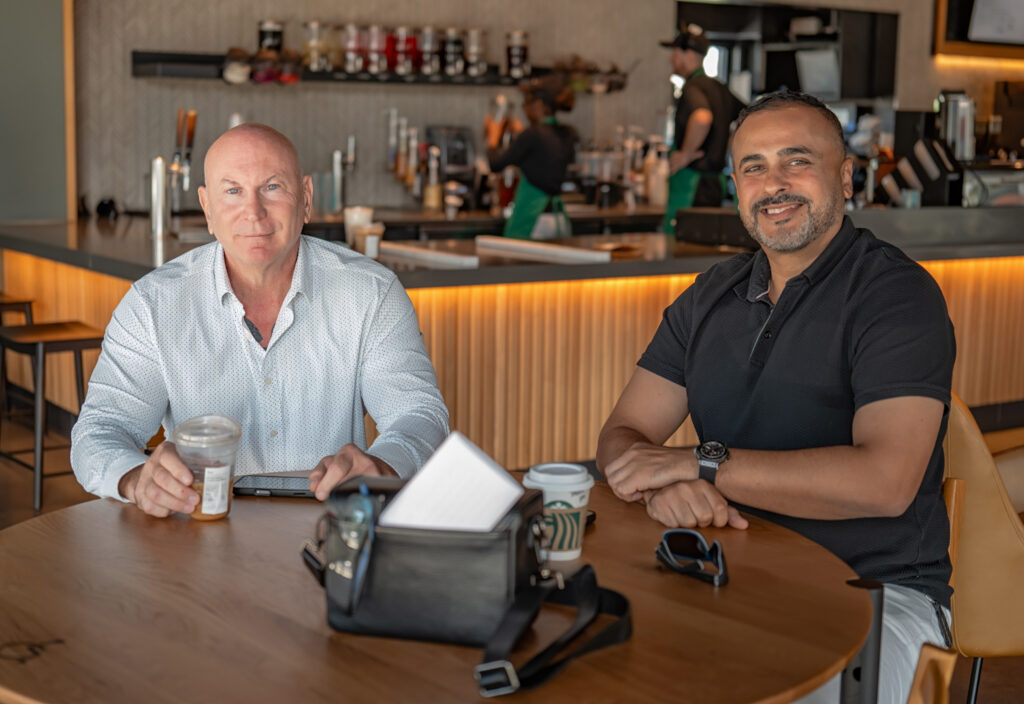
Before we parted, we arranged to sit down together on Tuesday and talk further.
And now, I’m looking forward to hearing the rest of the story.
THE McLAREN 750S
Let’s start with the car that caught my attention. Tell me about your McLaren. What led you to choose this particular car?
Joseph: I’ve owned McLarens previously, including their Grand Touring cars and the Artura hybrid. I’ve had both the first and second versions of the Artura. As great a car as it is, I felt the hybrid system wasn’t quite there yet for McLaren’s consumer cars. That’s surprising, given their Formula One background and all the hybrid technology they’ve developed.
When the 750S came out, I was intrigued, but I stayed on the sidelines for a while. I thought it was basically a 720 with a slight horsepower upgrade. I’d driven the 720 quite a bit. In fact, McLaren gave me one as a loaner for two months.
I wanted something with the performance of a GT2 RS or GT3 RS, but I also wanted a car I could drive every day. Something with that power, but with more comfort—a GT car.
Then McLaren invited me to test-drive the 750S, and I was blown away. I finally felt they’d got it right. You’ve got the raw power of a V8 with nearly 800 horsepower, but you’ve also got comfort, suspension, and technology. It brings all those things together without compromising the power.
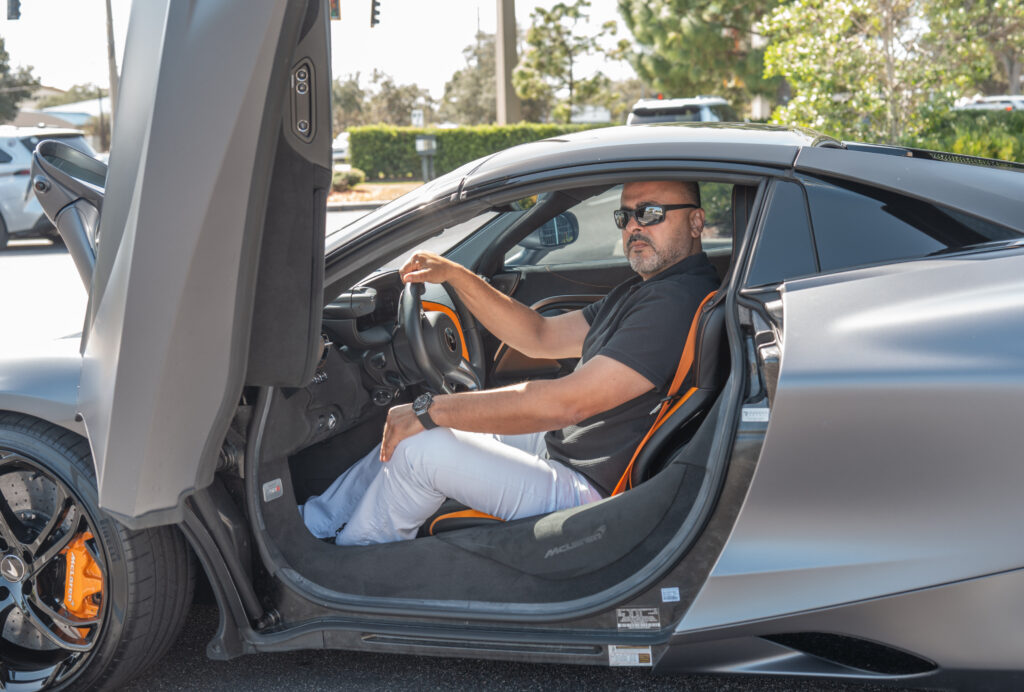
I drive my cars. I don’t keep them in the garage. I wanted something I could drive to Miami or West Palm Beach and back and still be comfortable.
So it’s not just a weekend car.
Joseph: No. I want to enjoy the car. I want the performance, but I also want to be able to use it.
THE MAKING OF AN ENTHUSIAST
How did your interest in cars begin?
Joseph: Like a lot of boys growing up, you fantasize about cars. You watch shows like Knight Rider, build model kits, and imagine those machines. The fascination has always been there.
It wasn’t until I went into government training that I began to understand cars differently. One of the training modules was high-performance driving. Some people call it defensive driving, but in the government training I went through, we called it a “crash and bang” course.
It taught you how to use the capabilities of a vehicle—how to brake, accelerate, handle different situations, and get out of trouble without losing control. Most people use only a small percentage of what their cars are capable of. The course was about understanding the vehicle and knowing how to respond when things go wrong.
The reason for that training was simple: American diplomats and intelligence officers can be targets overseas. You have to be prepared for bad situations.
And when did you get to put that training to use in a car of your own?
Joseph: Later in my career, when I was in Abu Dhabi, I bought my first Mercedes-AMG C63 507 Edition. That’s when I really experienced the raw power of a naturally aspirated V8.
I had all this training, and now I could take a car like that out on the beautiful roads between Abu Dhabi and Dubai. I could open it up, but also feel confident and be responsible about how I drove it. I still love that car to this day.
What was your first car?
Joseph: A Mazda 626. I was a poor student at Palm Beach Atlantic University, and I paid a thousand dollars for it.
It was the best thousand dollars I’ve ever spent. I loved that car.
A JOURNEY OF PURPOSE
Where were you born?
Joseph: I was born in Beirut, Lebanon. My parents were Egyptian missionaries working in Lebanon. My father was a pastor and ran the Near East School of Theology.
We lived there until I was about six years old, when the Lebanese Civil War broke out. The school where my father taught was bombed by a Scud missile, and we had to leave.
We went to Egypt, where my parents were originally from. They were asked to run a Christian orphanage in Assiut, in Upper Egypt. At the time, it housed around 750 to 800 children.
Growing up there was challenging. Assiut was associated with the Muslim Brotherhood and Islamist extremism. My parents were running a Christian charity, and I was exposed to that environment at a young age.
You may remember the man known as the Blind Sheikh, Omar Abdel-Rahman, who was connected to the 1993 World Trade Center bombing. He came from that area. I was classmates with his son.
That gave me an early understanding of Islamic extremism and terrorism.
How did that experience affect your own future?
Joseph: When it came time to go to university in Egypt, Cairo University rejected my paperwork. I tried applying to private universities, but they wouldn’t accept me either.
I believed it was because of my parents’ work at the Christian orphanage and because I was identified as a Christian. In Egypt, your national identity documents identify your religion through your family.
My parents couldn’t afford private university. I felt I’d lost all hope. Without an education, what was I going to do? How was I going to get a job?
Then a woman who had visited the orphanage reached out to me. She was a youth pastor from Tavares, Florida, and she had stayed in touch with our family.
She asked what my plans were. I told her what had happened. She said, “Stand by. There’s somebody I need to talk to here in the U.S.”
Her sons had attended Palm Beach Atlantic University in West Palm Beach. She shared my story with the university president, and about a month later, I received a letter offering me a full-tuition scholarship.
It was miraculous, to say the least.
I came to the United States, had to learn English as a second language, and took ESL twice. I majored in political science, and eventually I went on to earn my master’s degree in the Washington, D.C., area.
The CIA- A LIFE IN INTELLIGENCE
How did you first get involved in intelligence work?
Joseph: A friend of mine who went to Georgetown University said, “Hey, you speak Arabic. You should apply to the CIA.”
At first, I didn’t even know how you applied to the CIA. I thought, don’t they come to you? Back then, we had paper résumés. My friend offered to drop mine off because he knew recruiters came to Georgetown.
Two weeks later, I got a phone call. They said they had received my résumé and wanted to meet with me. I thought it was a prank. But it was real.
I became very interested when I learned about the Directorate of Operations. Those officers go into the field, collect intelligence, and provide it to policymakers. I thought, that’s the job I want. That’s the real James Bond.
One of the biggest parts of the initial training was surveillance detection. You learn how to drive through busy areas and recognize whether someone is following you without letting them know you’ve noticed.
My final driving exercise was a make-or-break day. If I passed, I could continue to the next stage of training. If I failed the vehicular portion, I would be sent to a desk job.
And that was the day of September 11.
Joseph: Exactly. I was in Crystal City, Virginia, about a mile from the Pentagon, preparing to start the exercise. My instructor suddenly pulled up in his Dodge and told me to get into his car.
I thought I was being kicked out of training. I asked him what was wrong, and he said something bad had happened in New York.
About twenty minutes later, the Pentagon was hit.
We heard the explosion and saw the smoke. We wanted to go there and help, but everything was blocked off. I was still in training, and my instructor told me to go home and stand by for further instructions.
At that time, I was one of a handful of CIA officers who spoke Arabic as a native language. I completed my training and was the first in my class to deploy to the field.
I felt that my experiences growing up in the Middle East, learning Arabic, and understanding the region had all come together. I had wanted to contribute to my new country, the United States of America. Now I had an opportunity to do that.
For the next ten years, I spent time deployed overseas in war zones. Iraq is the only country I’m allowed to name publicly. Much of my work was undercover, and I can share only what the government has cleared.
Declaring Peace
You’ve mentioned a story about negotiating a ceasefire in Iraq. Can you tell me about that?
Joseph: This was during the height of the war in Iraq. There was a major terrorist organization responsible for killing thousands of people. They were carrying out car bombings and truck bombings, and their leader had personal connections with Osama bin Laden.
The president had given a directive to find ways to calm the situation so U.S. forces could withdraw from Iraq. We were encouraged to think creatively.
We had the leader’s contact information, and I suggested that we call him.
My colleagues laughed. They asked me what I thought was going to happen. Were we going to invite him for tea and biscuits?
I said, “We’re desperate. We have nothing to lose.”
I called him in a neighboring country and used an alias. I told him we wanted to talk about a ceasefire. He hung up, destroyed his phone and SIM cards, and we thought we’d lost him.
About two weeks later, our targeting officers recovered his numbers, and I called him again. This time, he listened.
I told him we weren’t staying in Iraq. We were going to leave, but if he didn’t negotiate a ceasefire, other forces would come through and his people would be killed.
Two weeks later, the military captured him. He was one of the top ten most-wanted people. During his debriefing, he mentioned a man named Jamal in the Green Zone who had contacted him about a meeting.
The military initially thought he was making it up. But Jamal was the alias I’d given him. We had to disclose the operation, and I was flown by Black Hawk helicopter to meet him.
We met face to face. The next day, he declared a ceasefire with coalition forces.
And what did that mean in practical terms?
Joseph: The way I describe it is that not one bullet was fired against Americans or Iraqis from that terrorist organization after the ceasefire.
The Iraq War had a massive impact on me. You see what humanity is capable of. You see the death and destruction, and you realize how much evil there is in the world.
But that experience also showed me that we can be agents of peace. We don’t always have to use missiles or guns. Those things may be necessary in war, but there are other tools.
I call it “declaring peace.”
We declare war, and we commit billions and billions of dollars to it. But when it comes to peace, we talk about a peace process or peace talks. Nobody wants to give it the same attention.
I didn’t get a medal for negotiating a ceasefire. People get recognition for taking out a target, but there isn’t always recognition for preventing violence.
I looked at this man and told him the truth: we were the strongest nation on Earth, and we could continue fighting, or he could join the political process. We had no interest in staying in Iraq. His real enemy, I argued, was Iran, not us.
He believed me. It wasn’t a scripted conversation. The CIA hadn’t given me those words.
For me, that was a defining moment. It showed me the power of persuasion and the possibility of countering an ideology in a different way.
BEYOND GOVERNMENT SERVICE
You also mentioned a film project and your involvement as a consultant. What’s happening with that?
Joseph: It’s still early, and I’m under an NDA, so I can’t disclose all the details.
A few months ago, Vanity Fair published an article called “Spylandia,” which featured me. It discusses espionage activity in Brevard County and the targeting of the U.S. space industry by Chinese agents.
The article caught the attention of a production company and optioned the story because they’re interested in developing it into a miniseries about intelligence and espionage in the United States, with a focus on the Space Coast.
My wife and I have given them our life rights in connection with the project, and we’re signed on as consultants.
But these projects change all the time. We don’t know what role we might ultimately play, and it’s important to understand that it isn’t a show yet.
And since leaving government service, you’ve started your own consultancy?
Joseph: Yes. It’s called Site Advisors. The letters stand for Security, Intelligence, Training, and Executive Protection.
It’s a small boutique firm supporting government and nongovernment contracts. For example, we worked with American Magic, the U.S. sailing team, when they competed in Jeddah, Saudi Arabia. We provided a security assessment and physical security support while they traveled and competed in the Middle East.
I handpick the people I work with. Sometimes a project involves physical security, sometimes cyber security. Clients come to us for sensitive projects where discretion and confidentiality are important. They know I can put together a team with the right experience.
PERFORMANCE & PERSPECTIVE
Do you see a connection between your interest in cars and the other parts of your life?
Joseph: Honestly, I’m fascinated by the engineering, the capability, but also the story behind a car. As you can probably tell from this interview, when you ask me a question, I usually have a story to go along with it.
Tell me about the cars you have now and some of the ones you’ve owned.
Joseph: I have the McLaren 750S Spider, a 2026 Lamborghini Urus, and a 2026 Ford F-150 Raptor.
The Urus is the new hybridized SUV, and it’s faster than the McLaren. With the Raptor, they’re sending me to a driving course outside Las Vegas. If you own a Raptor, apparently you get to go drive in the desert. I’m looking forward to that.
I’ve had a Porsche GT4, a Mercedes-AMG GT GTS from its first model year, several C63s, a Porsche Taycan, and Mercedes G-Wagons.
I loved the C63s, especially the naturally aspirated V8 in the 507 Edition. The Taycan was one of the most beautiful cars Porsche has made, but I bought it in the first year it came out, and charging was frustrating. There were very few charging stations around here, and even the dealership didn’t have a fast charger at the time.
And this is McLaren number seven.
If you could add another car to your collection, what would you choose?
Joseph: I always go back to Porsche. I love the 911 GT3 Touring. It’s beautiful and understated, without that big wing on the back.
But then McLaren announced a limited-edition car with a manual transmission and a V8. It’s supposed to be a throwback to Bruce McLaren’s cars from the 1970s. I think it’s called the GT6, but I’d have to double-check that.
They haven’t confirmed an allocation for me, but they emailed to say they’d registered my interest. I hadn’t even registered directly with them; I was asking questions through a dealership.
That’s a car to keep for life. I’m looking forward to that one.
BEYOND THE PUBLIC PROFILE
What do you think people might be surprised to learn about you?
Joseph: People are usually surprised that I’m a first-generation immigrant who was persecuted, who had to mow lawns, deliver pizza, and learn English the hard way, and who ended up serving in war zones.
I was shot at. Rockets and mortars were raining down on places where I worked and lived in Iraq and other locations.
And people are surprised by how much I love my country. That’s the United States of America.
THE ROAD AHEAD
Looking back at everything you’ve experienced, do you think we shape our lives through the choices we make, or does life sometimes take us in directions we never anticipated?
Joseph: A little bit of both. I think we have to take responsibility. We have to shape what we want to be.
I’ve met people from countries around the world who’ve come to America, but they’ve chosen not to follow the path of working hard and getting an education. If I had chosen to be a victim of persecution and expect a handout, I wouldn’t be where I am today. I fought my way out of that, worked hard, and wanted to contribute to my country.
But sometimes you don’t know what’s around the corner.
One of my proudest achievements—hard to believe after the stories I’ve told you about the CIA—came after my wife and I left the CIA. We were contacted by Mark Burnett, the Hollywood producer, who wanted to do something about Christians being eliminated from the Middle East.
This was in 2016, during the height of the displacement crisis. My wife and I traveled to Iraq, vetted persecuted Christians, and helped airlift 149 people from ISIS territory to Slovakia.
Every part of our government training—vetting, government relations, diplomacy—came together in that operation. It was covered by 20/20 in an episode called “Escaping ISIS.” Elizabeth Vargas traveled with us to Iraq and witnessed the evacuation.
I could never have imagined that growing up in a village in Upper Egypt, going to school with the son of a terrorist, would lead me to the United States, to an education, to the CIA, and to the experiences I’ve had.
Sometimes life brings you opportunities you never expected. But when you’re prepared, when you’re trained, and when you’re hungry for more, there’s no telling what you can do.
Ordinary people can do extraordinary things if their faith is greater than their fear.
You have to be open, you have to fight hard, and watch what happens next.
EXPLORE BALDINO AUTOMOTIVE
The stories are only part of what I do. Take a look at the automobiles and the photography behind Baldino Automotive.