
October 6, 2026
THE COLLECTOR SERIES NO. 003
CARS, CIGARS, & GUITARS
The story of a car dealer’s son who found his way into the guitar business
and the people, cars, and friendships he collected along the way.
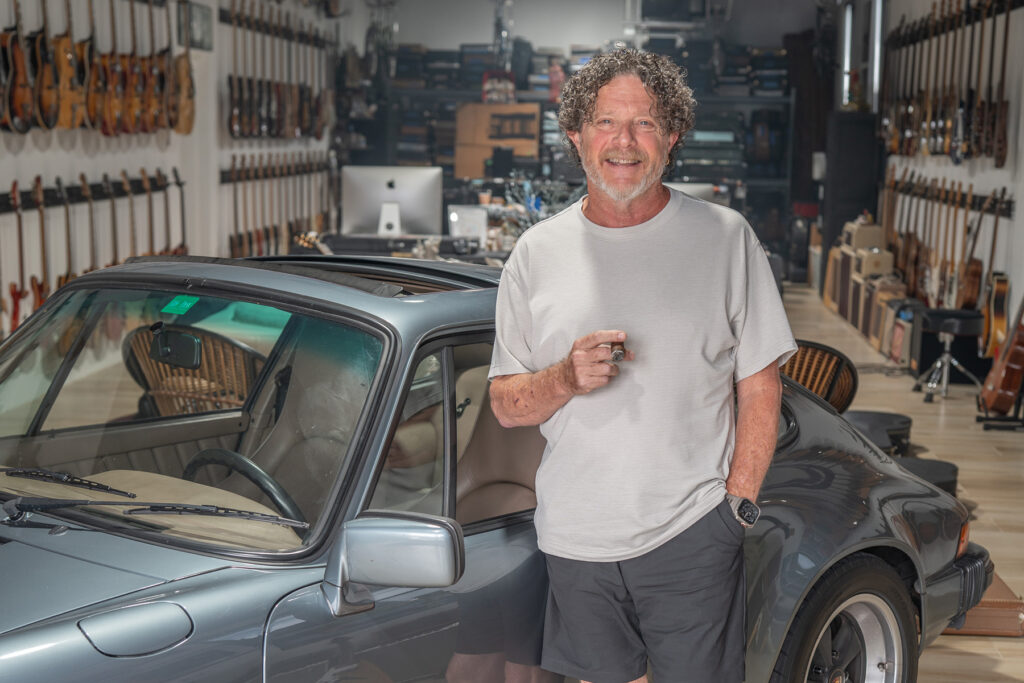
Craig Brody
I had four vintage guitars to sell.
I was referred to a guy named Craig who owns “The Guitar Broker” in Ft Lauderdale, that was interested in buying them. He was three hours away, so this wasn’t exactly a quick trip across town. I packed up the guitars, loaded them into the car and headed south. It was a beautiful Florida morning, and by the time I pulled into Craig’s showroom, it was just about 10 o’clock.
I had never met Craig before.
We carried the four guitar cases inside and set them down. I figured we’d open them up, he’d take a look at what I had brought, and we’d talk about the guitars. That’s what I had driven three hours to do.
But Craig seemed in no particular hurry.
Instead of opening the cases, he reached behind the counter and pulled out two Padron 1926 Maduro cigars.
Well, that got my attention.
We lit them, settled in, and started talking.
The guitars could wait.
And they did.
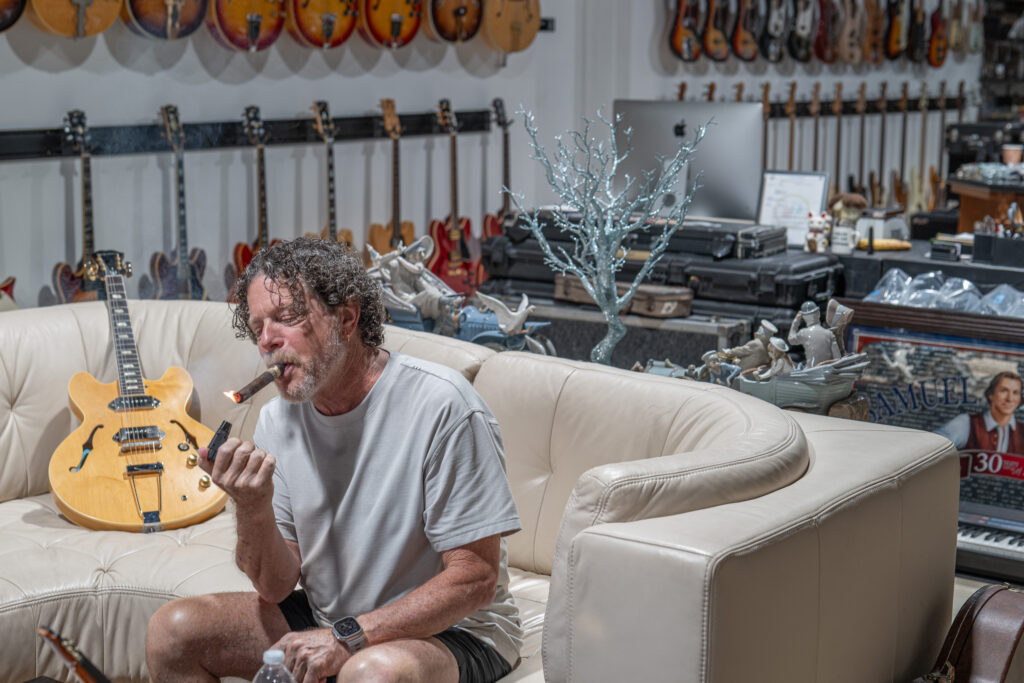
What I thought was going to be a simple transaction slowly turned into a conversation about guitars, cars, cigars, watches, collecting, business, musicians, and the people we’d both met along the way. One story led to another, and every time I thought we were getting back to the reason I had driven all the way to Fort Lauderdale, something else came up.
So we kept talking.
By the time we finally got around to the guitars, I had been there for well over an hour.
The funny thing was, I had gone there to sell Craig four guitars, but by then I was much more interested in how he had ended up with so many stories to tell.
So, I started asking him about his early years.
And, as it turns out, his early story had very little to do with guitars.
It started with his father, a car dealership, and a young kid who was already paying attention to the cars around him.
THE BEGINNING
Tell me about those days working with your dad at the dealerships.
Craig,
“As a kid, I was born in 1959. My grandfather was one of the first three Chrysler dealers ever in Long Island City in 1924. By 1928 or ’29, they opened up a huge showroom in Manhattan. He was an Austrian immigrant.
“He had Chrysler, Plymouth, DeSoto, Locomobile, Essex—all these brands from the time. My father worked for him. When my parents started to date, they were married in 1947. But my father was a tough cookie, and my mother’s father and brother didn’t like him. So he wound up going out on his own.
“In 1963 he opened up a Dodge dealership in Queens. Around 1970 he opened up a Pontiac dealership in Hempstead, Long Island. We lived in Rockville Centre.
“So as a kid, I used to get driven in to go clean ashtrays and sweep and vacuum and sweep the shop and do all that kind of stuff. Summer and winter.
“When it was on Long Island, I used to go in on the weekends in the winter, clean snow off the cars before it froze, wash the cars down in the winter, and I just did anything and everything because I loved being around the cars.”
Do you remember any of the cars from those days?
Craig,
“I remember every car we’ve had since ’62 or ’63. I was two or three years old. I always was a car nut.
“I remember driving in the back of a ’62 Thunderbird Sports Roadster when my father was running a Ford dealership with my family. The four kids were in the back seat, and my parents in the front, going into Queens to visit an uncle or aunt at the time.
“I just remembered the experience and the smell of the interior. It still smells the same.”
That was Craig’s first connection to cars: not collecting, not investing, not even driving.
Just being around them.
So when did you actually get into the car business yourself?
Craig,
“I started working for my father when I moved to Florida for college in 1977. I moved here and worked for my father until my parents got divorced at Hollywood Chrysler Plymouth, right here in Hollywood, Florida.
“But I always wanted to get into the car biz. In 1979, I was offered a job selling Volkswagens and Subarus. I was nineteen years old.”
There was a story attached to that job that could probably only happen in Craig’s family.
His grandfather had died, and Craig was getting ready to go to the funeral when the phone rang.
So you’re getting ready to go to your grandfather’s funeral and the dealership calls you?
Craig,
“My grandfather, who was the mogul in the family, passes away. We’re getting dressed to go to his funeral. My brothers and sister were in the apartment in Hallandale. We’re ready to go to the funeral. The phone rings.
“And it’s this guy calling me because he wants me to start today. The day we’re burying my grandfather.
“But I was still going to Miami Dade. I said I’ll be done in June, and I can come over then. August ’79, I started selling cars. I was twenty. I looked fifteen.
“But he just liked my pizzazz, my mouth. He liked how I talked. People used to come in the dealership. I look fifteen. They think I’m like the greeter. Next thing they know, they’re signing up a car.
“I was proud to say that I sold the very last Beetle convertibles, the last of the original buses, all before the Rabbits and the diesel Dashers and all that shit came out. I was selling all the early stuff, and I stayed in the biz for ten years. Great education.”
But there was another lesson from those early years that stayed with Craig.
You told me your father once said something to you that you never forgot. What was that?
Craig,
“The funniest story was when I was working for my father at the Chrysler dealer. I wanted to move into the parts department to learn the parts department. He had me out back cleaning cars.
“One day, I have an argument with my father in the middle of the shop. I’m saying I want to work in the parts department. I don’t want to work out in the back.
“He goes, ‘You think you’re so smart?’
“I go, ‘Yeah.’
“He goes, ‘You think you know everything, don’t you?’
“And I said, ‘Yeah.’
“He says, ‘Maybe by the time you’re thirty, you might know something.’”
Craig remembered that line.
So much so that he eventually said essentially the same thing to his own son.
His son worked for him for ten years. When he was twenty-nine, married and expecting his second child, an opportunity came up in California.
Craig told him to take it.
Craig,
“Your mom’s going to hate me, but you really need to go do that. That was the best move that I ever made for him, as well as ourselves.
“There was nobody left down here that would be in our daily life, and it was just the two of us. And to me, that was the beginning of the best years that we have together.”
Somewhere along the way, Craig’s story was becoming less about cars and more about the things that get passed from one generation to another.
THE GUITARS
So how did you get hooked into the vintage guitar thing?
Craig,
“In the seventies, when there were just a couple of shops that sent guitars out by mail, I used to buy guitars through the mail. So there was George Gruhn, and there was Mandolin Brothers in Staten Island.
“Here I am in the retail automobile business now, starting in ’79. By ’84, ’85, I was working at Hollywood Honda. I was there about eight years, nine years, on and off.
“It was getting very crowded with car availability when I started at Honda. It was like candy. A truck pulls up, and there’s eight cars on the truck. And if you sold enough Accords, you made five hundred bucks a pop every time one landed.
“But then when the commissions started to drop, and you had to sell double the cars, I went, ‘I can’t do this and work six days a week. I got to find something else to do.’”
So it kind of forced you into the guitar thing?
Craig,
“Out of necessity. So I started buying a Country Gentleman for seven hundred and selling it for a grand.
“I started wholesaling guitars. I started digging them out of pawn shops. At the time, there was no internet, back in ’87, ’88, ’89. What happened is I got jerked around in the automobile business so bad that I had to make the decision to get the hell out.”
What did you do?
Craig,
“Call up the dealers up north that were known at the time, and I sell it.
“Once I had a falling out with the dealership I was at, my game plan was to get out. So I got a job in North Miami Beach with a friend of mine, Bobby Button. I went to work for him for a year, and I started hoarding guitars and putting them away in a spare bedroom.”
Then came the moment when the hobby became impossible to ignore.
Craig’s wife was pregnant.
And there were roughly seventy guitars in the spare bedroom.
Seventy guitars?
Craig,
“My son was in my wife’s belly at the time, so January ’89. She was pregnant. My son was due later in the year. My wife showed me the room with seventy guitars in there.
“In cases. Seventy or so. I put away all kinds of stuff.
“And she says to me, ‘What do you want to do, babe? We’re going to need the room soon. You want to wait till after the baby’s born, or you want to get started now?’
“And I went, ‘Hell! By the time the baby’s born, we can probably be making a profit. Let’s get busy.’”
So that’s when you opened the store?
Craig,
“That was it. A month later, I picked out a place on Davie Boulevard. Put all my shit on the wall, had a typewriter, and I had an ad in Guitar World and Guitar Player for mail order, and I got a PO box Mailbox Etc. at the time.
“Before that, for a year, people kept showing up to Mailbox Etc. like it was the guitar shop, but it was a PO box.”
There was one final push out of the car business.
Craig was fired from Hollywood Honda.
On the 365th day of his contract.
Craig,
“Because the manager above me knew I was going to get his job, they brought me back on a year contract, which doesn’t happen. They brought me back to put me in a better position. But the new car manager knew I was going to get his gig, and he bitched about me.
“On the three hundred and sixty-fifth day of my contract, I was fired.”
The 365th day?
Craig,
“Two weeks before that, I watched each area, used and new, at the dealership while they each went on vacation, not knowing I was going to get fired. I did double the business in both areas while I ran them.
“So I went to see my boss, who ran the place. I said, ‘What are you firing me for?’
“‘You don’t have experience, Craig. You’ve never been a manager. How are you gonna do that?’
“I just proved myself.
“‘I’m sorry, Craig. We got them here.’”
Craig went home without a job.
He now had a young daughter, and a room full of guitars.
So what did you do?
Craig,
“I get home. My daughter’s having a play date. It was way before I had the business, and my wife sees me come home with no job.
“That was the beginning of the end of the car business.
“So when I set the store up, I had a refrigerator full of wine coolers, had my typewriter, before I even bought a computer, wearing shorts, got my ear pierced, and just looked around for guitars and went back to my store and started.”
THE ONE THAT GOT AWAY
By then, Craig had been buying and selling guitars for years.
So I wanted to know about the one that still stood out.
What was the most memorable instrument you’ve ever owned?
Craig,
“That would have to be a ’58 Les Paul Standard in cherry red. The best example, maybe.”
And do you still have that guitar?
Craig,
“Kirk Hammett owns it today. I didn’t sell it to Kirk. He’s in Metallica. He owns it. He paid five hundred thousand for it.”
So Kirk Hammett bought that guitar from you?
Craig,
“Not from me. It left me and went to a collector forever, then went to a dealer forever. And then he got it from the dealer. I bought it from an older fellow.”
So you wish you still had that guitar?
Craig,
“That guitar could be a million dollars now.”
THE PEOPLE ALONG THE WAY
You’ve been around the vintage guitar world for a long time. Who are some of the people you’ve crossed paths with that you’ll never forget?
Craig,
“Famous or not famous?”
If you want a name drop.
Craig,
“I have a lot of those, but I don’t want to bore you.”
That’s okay. Start from the top.
And Craig did.
Eric Clapton. Alan Rogan. The Who. Pete Townshend. Roger Daltrey. AC/DC. Bad Company. R.E.M. Geddy Lee. Brian Adams. John Fogerty. Joe Bonamassa.
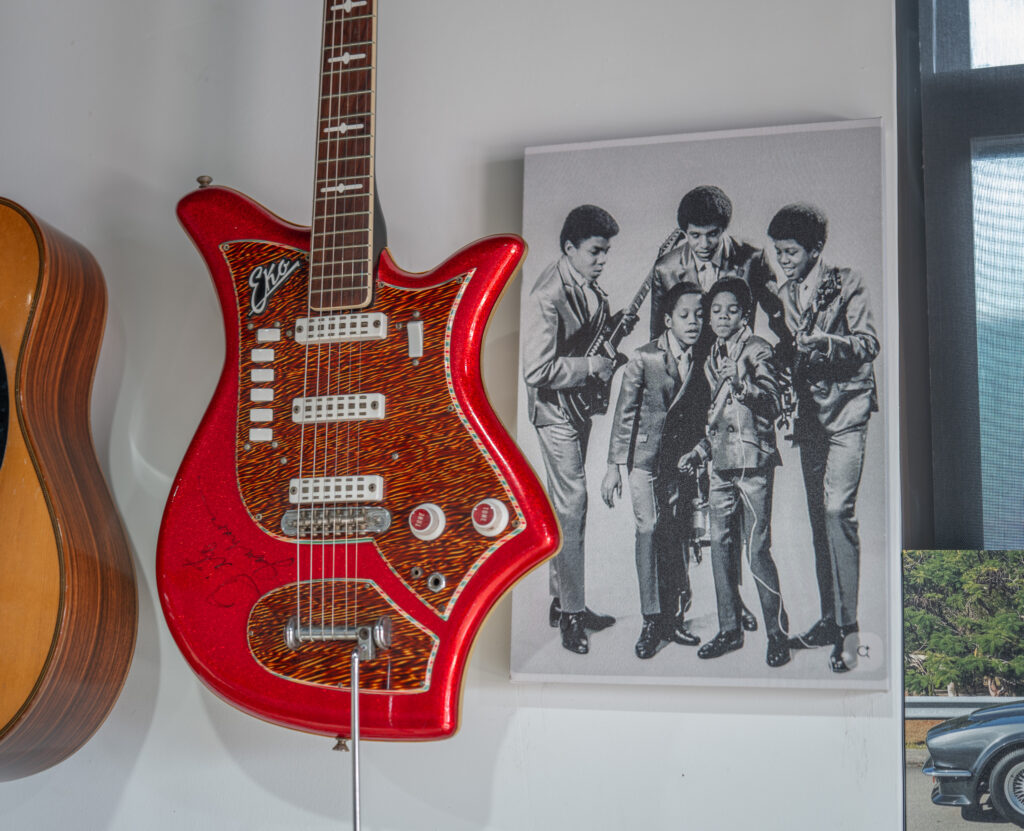
Tito Jackson’s Guitar
A guitar owned by Tito Jackson, guitarist and founding member of the Jackson 5, displayed alongside a photograph of the Jackson brothers from their early years.
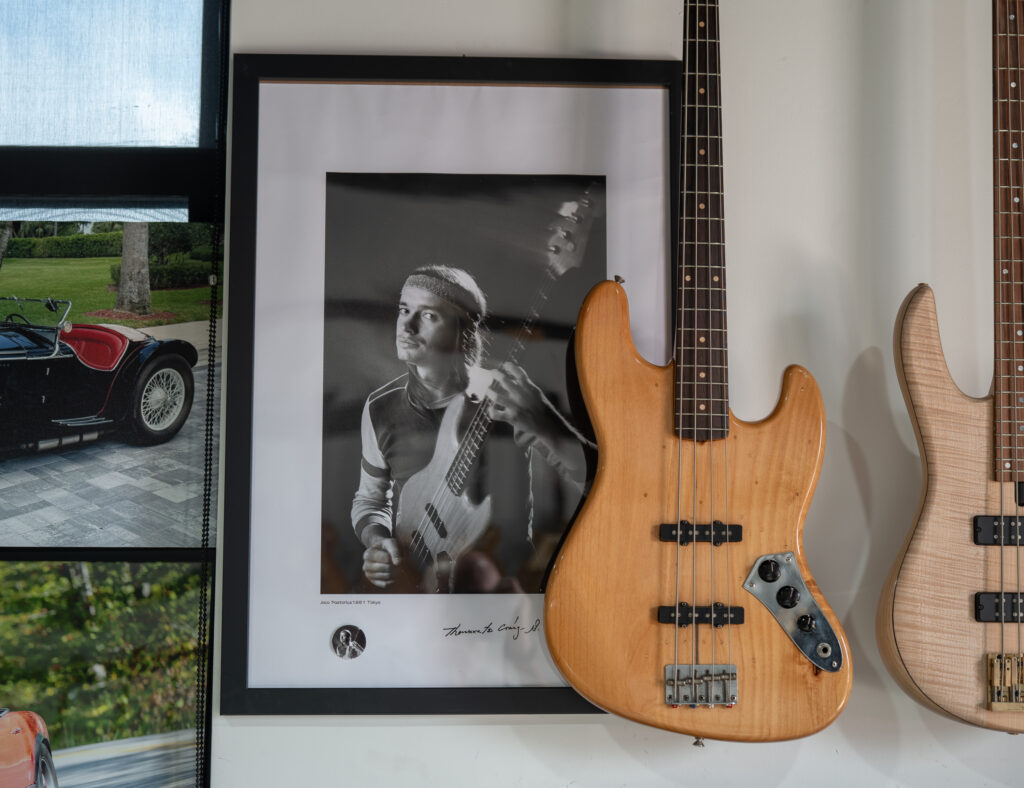
Jaco Pastorius’s Bass
A bass owned by legendary jazz bassist Jaco Pastorius, displayed in Craig’s collection alongside a photograph of Pastorius performing in Tokyo in 1981.
But the names weren’t really the interesting part.
The stories were.
Craig had sold a 1953 blonde L-5 to Alan Rogan, who worked with some of the biggest British bands. He sold guitars to members of The Who. He met Zak Starkey. He had sold equipment to U2 over the years without ever meeting the band. And then there was R.E.M.
So they actually came into your place?
Craig,
“I got pictures up there on the back wall. That’s pretty cool. Mike Mills, the bass player. I’m not into R.E.M. per se. Peter Buck was a little bit of a starstruck guy with his glasses. Never took them off.
“Mike Mills got down on the floor, played with Peaches, my Lab, and he bought a Martin, maybe. I sold him three or four things, whatever it was. Mike Mills.”
A few years later, Mills came back.
Craig had a showroom across from the Galleria Mall by then, and on the wall was a guitar Craig owned personally.
A 1967 Precision Bass with a maple-cap neck.
Craig,
“He goes, ‘What’s that?’ I said, ‘That’s mine.’ He goes, ‘What is it?’ I said, ‘It’s a maple-cap neck bass. It’s really a good bass.’
“‘Can I buy it?’
“I said, ‘Of course you could buy it.’ So he buys it.
“It became his favorite bass on Earth. He still plays it.”
I’ve got to imagine it’s pretty worn now.
Craig,
“He wore the shit out of it. All the paint was off the top of the body.”
Craig also told me about delivering a guitar to Brian Adams at the Fillmore in Miami and spending about forty-five minutes with him.
And he has known Joe Bonamassa since Joe was sixteen.
The business, Craig said, is a small world.
WHAT ARE YOU REALLY COLLECTING?
By then, we’d talked about a lot of guitars, a lot of cars, and a lot of people. I wanted to ask him something different.
So when you look back at everything—the cars, the guitars, the people, and the worlds around them—what do you think you’ve really been collecting all these years?
Craig started to answer, then stopped.
So I pushed him a little.
It’s not really about the guitars themselves or the cars or anything like that.
Craig,
“I was going to say you become a psychologist when you sell for a living. So when you meet people, you figure people out very quickly. You judge people, and over the years, you can judge a person pretty fast within a minute of a conversation.
“Who’s full of baloney and who’s not?”
So you must have met a lot of shitters. And you can’t shit a shitter.
Craig laughed.
Craig,
“They try. Lord knows they try, and I’m still friendly with many shitters. But I always watch my—I count my fingers and my toes when we’re finished.”
Then he told me about a Telecaster someone had tried to sell him early in his career.
The guitar looked right.
But Craig knew enough to ask what was underneath the pickguard.
It was routed out for a humbucker pickup hidden underneath it.
The seller took the guitar back.
Craig still knows the guy.
And Craig still does business with him.
Craig,
“You judge people. And a lot of famous people, when they’re first famous, are not nice people. As they get older, they become one of the coolest guys that I did business with for years…”
He went on to talk about John Fogerty, whom he’d recently seen in concert.
Then Joe Bonamassa.
Then we came back to the thing that had been there from the beginning.
So you’ve always had that instinct for value?
Craig,
“For some reason, since I’m a kid, I guess amongst the collecting of things, I’ve always been really keyed in on the value of things and not losing money, and trying to make money on fun things.”
So, more or less, that became your business.
Craig,
“It was a hobby that turned into a business. I used to say I sell cars to buy guitars, and then it turned into I sell guitars to buy cars, and now I kind of still do both.”
And that seemed to explain a lot.
Craig wasn’t simply collecting things.
He was looking for things that mattered.
Things that were rare.
Things that other people might overlook.
And, if he could enjoy them along the way, even better.
THE CARS
So you’ve had a good collection of cars over the years. What was your favorite?
Craig didn’t hesitate.
Craig,
“I have to say, my 1970 Lamborghini Miura S was probably my favorite and most valuable car. I’ve been lucky in the business over the years to have a lot of valuable cars that have gone up tremendously over the years.
“I had briefly two original Mercedes Gullwings that I sold at the time. I’ve had three Lamborghini Countachs over the years, and Boxers, Ferrari’s, and a lot of great cars.
“But I like eclectic cars.”
What is it about those cars that attracts you?
Craig,
“I like the beginning of time. The earliest race cars were always intriguing. I like to buy cars that are race cars that I can drive on the street. That’s always been my favorite thing to do.
“I had a 1965 Shelby GT350. For twelve years, I had it. I drove it to Home Depot. I drove it to Sebring to drive it on the track. I enjoyed it.”
He took the Shelby to Moroso Speedway and drove it hard.
Craig,
“You’re falling off the seat because that’s what came in the car. So I’m driving on this track, holding the steering wheel with my arm on the door so I can shift it quickly before I had to get back on the wheel again.”
Then there were the Abarths.
Small, raw, race-bred cars that Craig could actually drive around town.
And now there was the 1935 Riley Imp.
Craig,
“The newest car I bought, this 1935 Riley Imp, was the earliest of the most beautiful British sports cars at the time, like Jag, like Alfa. I’ve always wanted one. They only made 120 of them ever.
“Recently, I bought it, and it was delivered. Never looked at it, never sat in it, and had to start from scratch. And I’m so into it, and it runs beautifully.
“The car is streamlined and sexy, like the earliest sports cars, with the long nose and the short little tushies on them. They’re beautiful with chrome and leather, and they’re just artwork.
“And you learn how to drive them. To me, that’s exciting.”
Then Craig started talking about modern hypercars.
He doesn’t particularly care for them.
They’re faster. Louder. More expensive.
But, to him, they don’t necessarily make the experience better.
And then he caught himself.
Craig,
“I always got angry at the guys revving their motors on all their Lambos and their McLarens and they’re spitting out fire and the thing—you sound like you’re blowing the motor up.
“And I used to get mad at them. And then it hit me one day. I’m at a little car show in Weston smoking a cigar, and I went, ‘Oh my God. That’s just like we were, with Hemis, with big blocks. We used to rev the shit out of them.’
“I finally figured out they’re not such imbeciles. This is what we did. The same.”
Then he went back to what he really likes.
Craig,
“I like Porsches that you have to drive.”
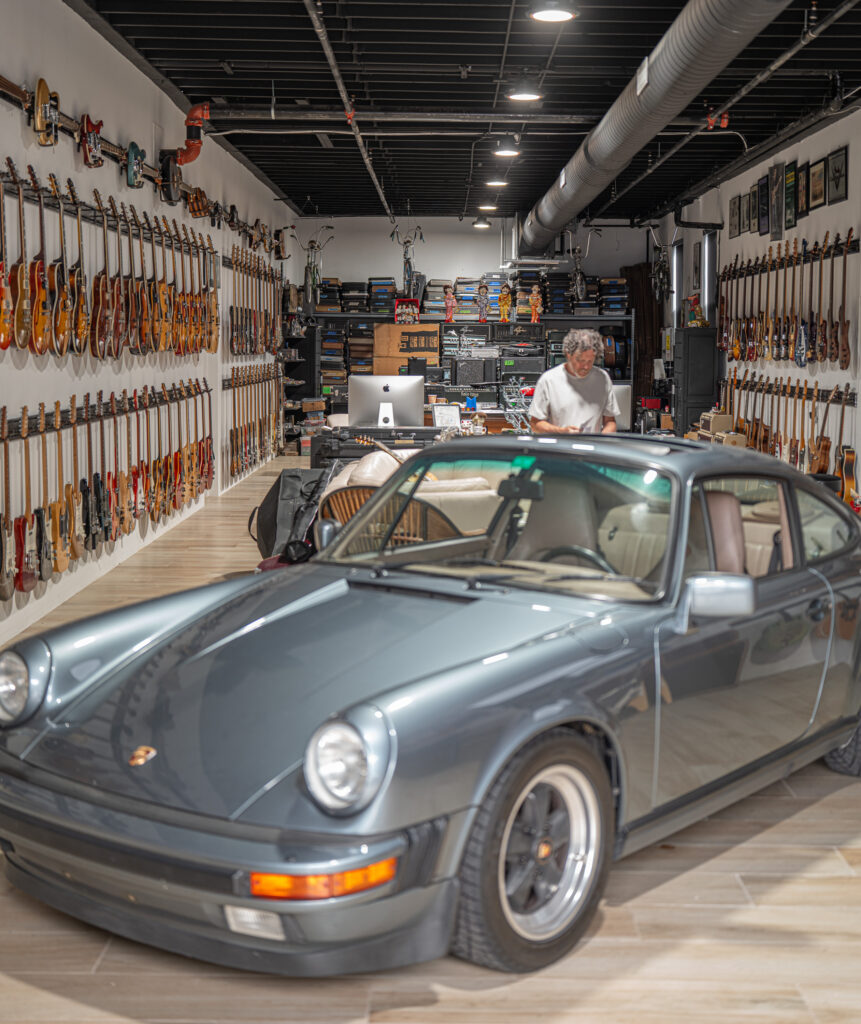
1OFF 911
At that point I looked behind me.
We were sitting in Craig’s showroom, surrounded by hundreds of guitars, and there was a Porsche sitting right there.
So speaking of 911s, here we are in your showroom. What is this car?
Craig smiled.
Craig,
“My collecting, and all the cars that I’ve had. I’ve had cars that no one has ever heard of, one-of-a-kinds, three-of-a-kinds.
“I like open-top cars, but I bought this particular 1985 911 Carrera because it was just a beautiful coupe with no tail, and it was the last of the traditional 911 bodies before they changed them drastically in the nineties.”
He had a very specific reason for buying this one.
Craig,
“I wanted to get a special one, in special colors, that would be a good collectible. So I bought that car three years ago for these reasons. I bought it on Bring a Trailer.
“1983 and 1984, they made Slate Blue with Gray Beige inside. 1985, they didn’t. So someone ordered this special order in ’85, Slate Blue, Gray Beige.
“They also ordered all the better options. So it’s got the sport seats with the big bolsters, electric roof, sport shocks, sixteen-inch wheels, and it was untouched.”
The car was, by Craig’s standards, essentially perfect.
Craig,
“Minty—not a wear spot in a seat, not a rubber trim that has any fade. The fuzzy on the sunroof is perfect.
“The exterior has what’s called paint to sample today. It was thirteen hundred then. Today it’s fifteen to twenty-five thousand for special paint.
“The interior at that time was called the interior to sample. It was nineteen hundred and thirty dollars on the original window sticker. Today, that interior could be twenty-five thousand dollars.
“So I saw this one of a kind, and I had to have it. It was just from photos, but the way they described it, and our eyes as an artist, I bought it. And I paid a world-record price that week. And it was one of the best moves I ever made.”
His license plate says everything.
1Off 911
Craig,
“That’s my tag.”
There are younger guys who pull up beside him in half-million-dollar GT3 RSs and barely notice his car.
Craig doesn’t seem bothered by that.
Craig,
“The guys that know that it could be a two hundred fifty or three hundred thousand dollar car today, those are the guys that appreciate it.”
He paid $116,000 plus tax and fees.
And then he told me about his wife’s Porsche, another highly optioned 911 Turbo S Cabriolet that he bought for under $150,000 and that he believes could now be worth considerably more.
The pattern was becoming pretty obvious.
Craig,
“It’s limited one-of-a-kind cars, one-of-a-kind guitars. Same thing. When you have your Dale Unger one of a kind. That’s what that is.”
Then he summed up the philosophy behind it all.
Craig,
“My thing in life with cars and guitars is owning and making money while you own it and enjoy it. Drive the cars, don’t look at them.”
You’d call those other cars garage queens.
Craig,
“It’s foolish. But that’s where the money is. It’s in the no-mileage cars.”
WHAT MATTERS MOST
By then we’d been talking for quite a while.
The guitars were still part of the reason I’d driven three hours south, but they had become almost incidental.
We’d talked about cars, guitars, musicians, collecting, business, money, friendships and the people Craig had met along the way.
There was one last question I wanted to ask.
What do you think has mattered most to you throughout this entire journey?
Craig didn’t hesitate.
Craig,
“My wife. She’s the one person stuck with me through every adventure.
“We know each other since we were ten and eleven years old, and she let me loose with whatever business venture I wanted to do. She had business ideas. She wanted to go to cooking school before we were married. She wanted to have a clothing store, but she gave up all her dreams so I could chase my own, which was ours.
“That’s really the hippest thing.”
Then he talked about what they want now.
Craig,
“All we care about is staying healthy. She’s a gourmet cook. We eat as healthy as could be. We want to live to a hundred, and I think we might be able to.
“The people that get old together are happy together, and most of the people that live to a hundred have a significant other in their life. So I think that’s a very important thing in life.
“And like I said, she’s enjoying the fruits of life now. She’s on her seventh 911. So that’s how much I take care of Mama.”
EXPLORE BALDINO AUTOMOTIVE
The stories are only part of what I do. Take a look at the automobiles and the photography behind Baldino Automotive.
