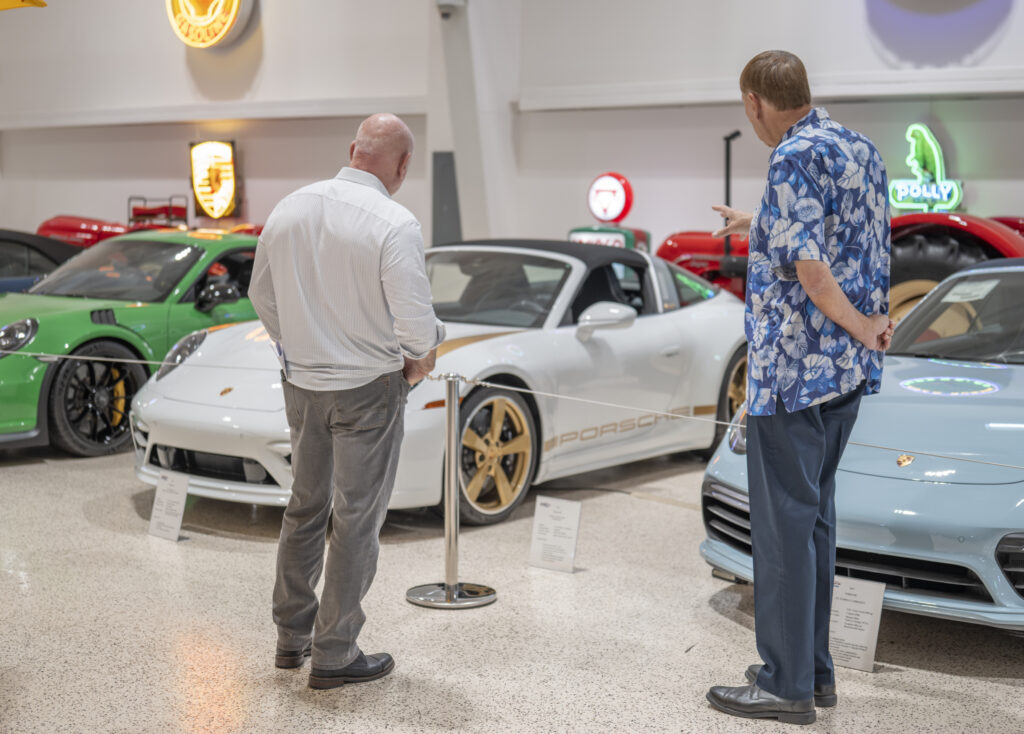
The story of Mark Pieloch, the uncle who shaped him, and the lessons that helped build his life.
Today, I’m finally introducing you to the man behind the cars.
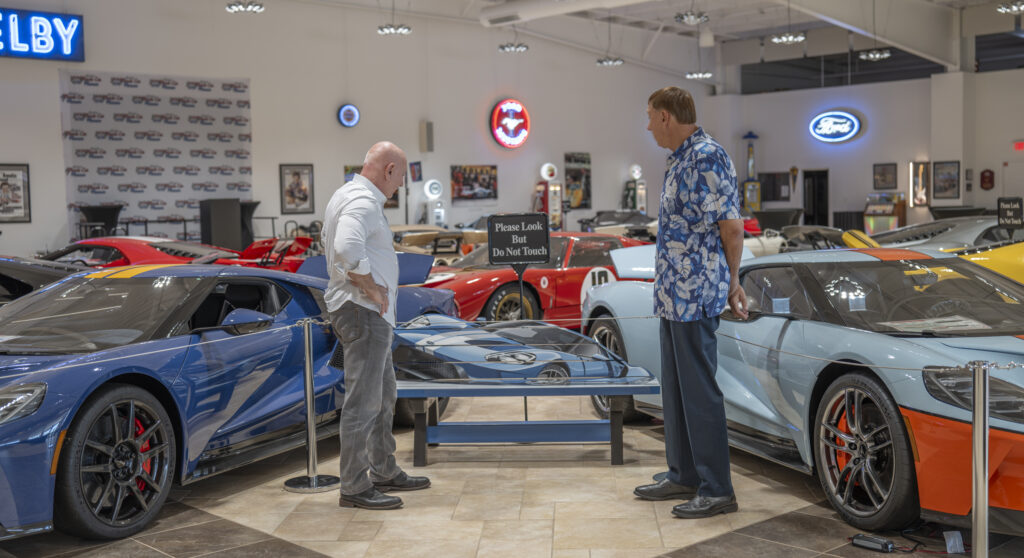
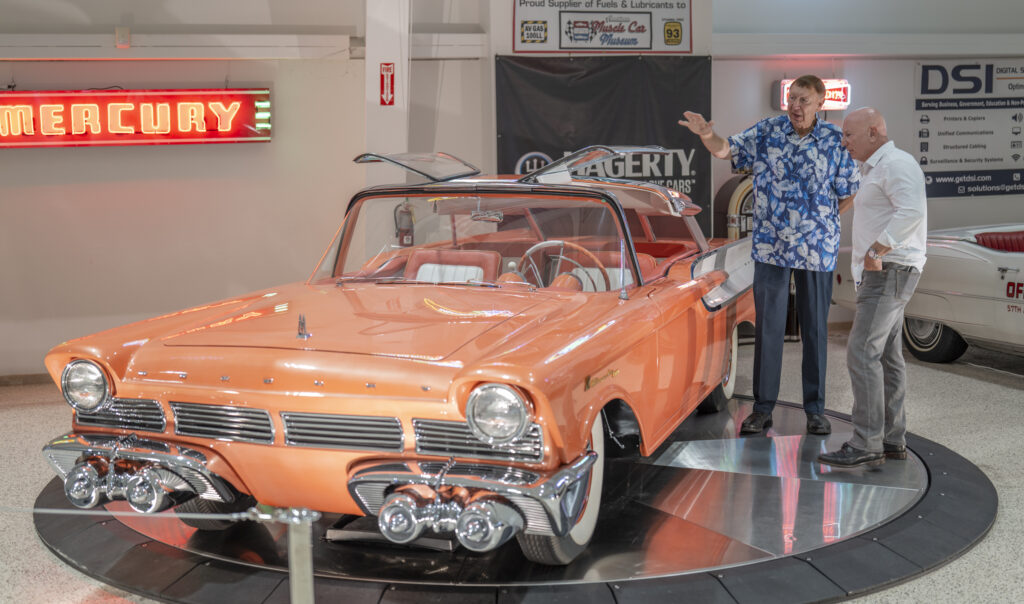
Photo Credit – Andrew Mackey
Mark’s interview is the first in my new Collector Series, and I couldn’t have asked for a better way to begin.
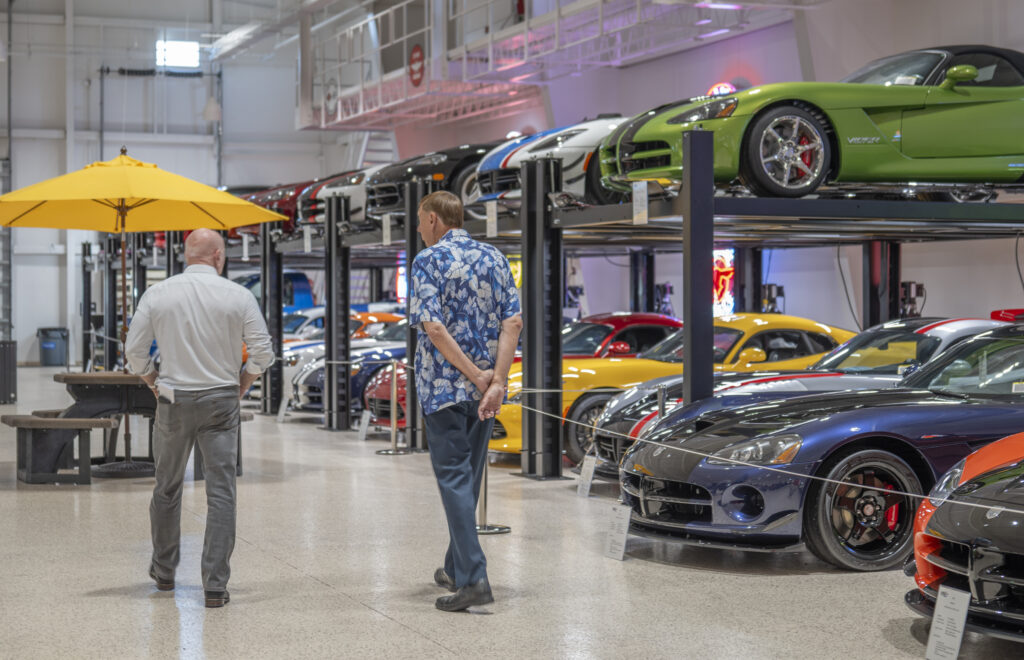
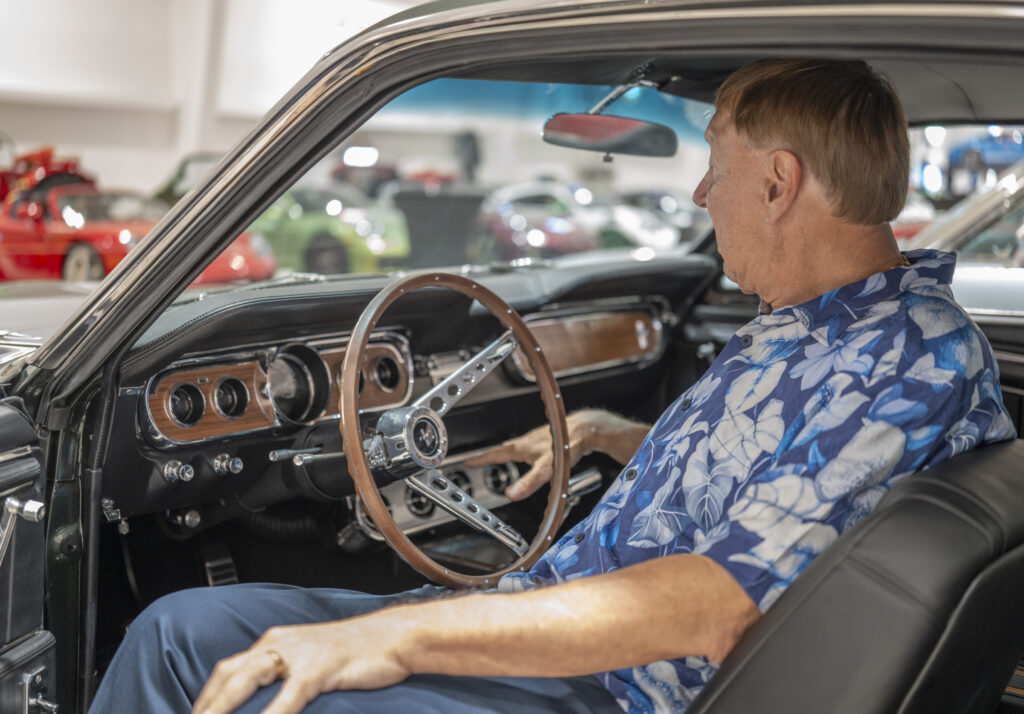
We spent about three hours together talking, laughing, taking pictures, walking through his museum, and stopping along the way to talk about cars that have special meaning to him. One of them was the very first car he collected for the museum, his 1965 Mustang GT Fastback.
But somewhere along the way, I realized something.
The cars were only part of the story.
There was a whole lot more to Mark Pieloch than the incredible collection he’s built.
And what a story it is.
I hope you enjoy Mark’s story as much as I enjoyed hearing it.
Picture this…
Gardner, Massachusetts. 1960s.
A small New England town where people knew each other.
Kids walked to school. Doors were left unlocked. Neighbors looked out for one another. Life moved a little slower, and a kid could spend the day outside without anyone wondering where he was.
This was where a young boy named Mark grew up.
He was five years old when he and his brothers, sisters and cousins began spending time playing at his uncles’ junkyard.
An artistic interpretation of the Gardner junkyard where Mark spent much of his childhood.
Eventually, they discovered something.
There was money in those cars.
When a shipment of junk cars came in, Mark, his older brothers and sisters, and his cousins would race to the newest cars.
They’d dig through the back seats and floorboards, searching for coins.
Almost like an Easter egg hunt.
Except for young Mark, the prize wasn’t candy.
It was getting to buy another Matchbox car.
The junkyard coins weren’t the only way Mark learned how to get another Matchbox car.
By first grade, he had another way.
Work.
Every week, Mark had chores to do around the house. When the work was finished, he earned fifty cents.
Fifty cents was enough for one Matchbox car—including the tax.
To a six-year-old boy, that was a pretty good paycheck.
Do the work. Get paid. Buy another car.
It was a simple lesson, but one that would stay with him.
Ray: Mark, I’ve known you for about ten years. I’ve photographed you, we’ve talked, and I’ve watched all this grow.
I know the cars. I know the museum. I know what you’ve built.
But I really don’t know the man behind it all.
So help me understand who Mark Pieloch really is.
Mark: Basically, I grew up in what you’d consider the typical American household. I had two parents, five siblings in one household, a dog and a cat. You kind of grew up in what they considered middle America.
We grew up in a small town in Gardner, Massachusetts, about sixty miles outside of Boston.
Where we grew up, we had no front-door lock. You couldn’t even lock the front door of your house.
We lived on a dead-end street where all nine neighbors knew everybody. People used to sit out front on their porch because nobody had air conditioning in the summertime. You knew all the neighbors and all their history.
It was almost like a Mayberry R.F.D. family environment.
You knew the local cops, the postal carrier, the sanitation person. If you didn’t know somebody, somebody on the street did.
So that was kind of my background.
Mark: As a kid growing up, one of my uncles, Uncle Eber, had a junkyard. My mom would go visit her brother every three or four weeks. She’d go out there on a Sunday after church, and us kids could go play in the junkyard.
Basically, they’d say, “Well, go off in the junkyard and play.”
Can’t break anything; it’s a junkyard.
We’d play tag and hide-and-seek.
And the other thing we learned real quick was that there was money in those junk cars.
People didn’t pay with plastic back then. They paid with real money—dollar bills and coins.
If you had pants on and sat in an old car, the way you sat, your pants were kind of at an incline, and the change would work its way down.
We found out real quickly that if you put your hand behind the front seats, which were usually bench seats, or even in the back seat, you could feel around and find change.
It was just like an Easter egg hunt.
And every time my folks would let us go play for a couple of hours, you’d come back and you felt rich.
Some days you found over a dollar’s worth of change.
And as a kid, that was huge.
Ray: What did those Matchbox cars teach you?
Mark: It gave me discipline. I had to make sure I did my chores to earn the money so I could afford to buy one. That was motivation.
We didn’t have a household where you were given things. You got gifts on your birthday and at Christmas, and anything else, you had to work for.
It was a different mindset.
We never ate out as a family. When your birthday came around, you could pick where you wanted to go eat. That was one of your birthday presents.
We ate real food at home, and my parents taught us the value of a dollar. Since they lived through the Depression, I think that greatly affected them.
One thing my mom always said was, “You can go look at a new car,” but she said, “You know what? We’re never going to sign any car loan for you kids.”
We’re going to give you your first car.
It was going to be a hand-me-down from the folks. We were going to make sure it was mechanically good—the brakes were good, the shocks, the battery, everything worked properly.
That first vehicle was yours.
But you had to work for the insurance, the registration, put fuel in it and maintain it.
Ray: Well, that’s a great segue for my next question. I understand that you restored your first car when you were 15 years old. What was it?
Mark: It was a 1967 Ford Ranch Wagon.
People would say, “Geez, that’s not a muscle car.”
And I’d say, “Hey, after walking for all those years, anything that had wheels on it was a blessing.”
You were dreaming, maybe, of having that fancy Mustang or Camaro or Firebird.
But hey—
wheels come first.
Mark and Ray inside the museum. For Mark, the connection between cars and his childhood goes back much further than the museum. Photo Credit – Andrew Mackey
Ray: What did you enjoy about restoring that particular car?
Mark: I always worked with my dad and uncle on the vehicles. I had an older brother, Dexter, who got into restoring cars after he got back from Vietnam.
Seeing that was different from my father and uncle, who viewed the car as transportation. It was a family vehicle—you go from point A to point B.
You would wash the car only when it was so dirty that you couldn’t see out the windows. That was kind of the motto of my dad and my uncle.
Dexter was different. We all joke that there’s a black sheep in every family, and Dexter was ours.
Dexter was that black sheep. All the kids went to college. Dexter was the only one who never graduated from college, and when he went to school, he majored in wine, women and song.
He had one hell of a great time.
Dexter loved restoring cars. He loved Fifty-Five Chevys and ’49 Mercs.
So, Dexter was an influence on me to restore my first vehicle and make it look as good as possible.
And the beauty was, my uncle who owned the junkyard said, “Anything you need for parts is free.”
My other uncle Johnny worked for Eber. He said, “If you ever need anything, the first time Johnny will take it off for free. Second time, Johnny will take it off with you. But you’re going to be the lead guy doing the work.”
“And the third time, you’re on your own.”
Or, if you really need a part real fast, go buy a cold six-pack of beer, bring it to Johnny and say, “Hey Johnny, I need such and such.”
He’ll pull whatever you need—an engine, transmission, anything.
But make sure before you give him that cold six-pack of beer, you get your part.
Because once you give him that cold six-pack of beer, you’re not going to get that part that day.
Johnny had priorities. Beer came first.
Ray: That’s so funny. Hey, when you started this museum here, do you think about that first car of yours?
Mark: Yes, I do. Because when I restored the car, it looked like a brand-new 1967 Ranch Wagon.
Ray: I have to ask you, is the car here?
Mark: No, no. The car actually got stolen in Boston. I had six cars stolen in six years in Boston.
When I restored the car, my dad said to me, “You know, you’re fixing that car up. It’s going to look like a brand-new car.”
And when it was all finished, he said, “You know, shit, you’re going to take that to Boston, and they’re just going to steal that damn car.”
And I said, “Who the hell’s going to steal such an old station wagon?”
Well, six weeks after moving to Boston to study college, I called home one Friday afternoon and said, “Hey, I don’t think I’ll be coming home this afternoon.”
“Why not?”
“Well, somebody stole the car.”
Ray: I guess you really wish you still had that car.
Mark: Yes, I’ve looked for that car for years at different swap meets, Bring a Trailer, Hemmings Motor News. I’ve never found another 1967 Ford Ranch Wagon.
And the Ranch Wagon was the bottom-of-the-line station wagon.
Coming from a very practical family, you didn’t order an LTD with the wood-grain siding.
My dad was like, “I need a basic station wagon.”
I don’t need all the extras. I don’t need third-row seating. The kids can jump in that back end; they can sit wherever they want.
Ray: Let me guess, you’re still looking for one.
Mark: I always look. The 1966 is different than the 1967, and the 1967 is different than the 1968. I have never found one.
If I ever did find one, I’d go ahead and have it restored.
Ray: Exactly the way you had it. That’s a good remembrance.
Mark: And you know, restoring a car taught you hard work, and it also taught you a lot of mechanical skills.
If you can disassemble an entire vehicle and then reassemble that entire vehicle, that’s a great learning process.
Most people today don’t have any idea how to do something like that.
And that knowledge really helped me be successful when I started my first company.
When I started my first company, it was me, and I had to buy all the equipment to manufacture product. I had to buy a forklift, a tablet press, a ribbon mixer, a labeling machine.
You had to learn not only how to maintain and run the equipment, but also how to teach your future employees how to operate it.
So, all of that came from my basic skill set of restoring an automobile when I was fifteen years old.
And prior to that, when you were at the junkyard, the beauty of Johnny is…
Johnny was a mechanical whiz and so, Eber was a business whiz. They were two brothers. Eber could count dollars and cents, and he did a fabulous job. Johnny had different priorities in life than Eber did financially. But Johnny taught you a ton of things when some guy came in or whatever you’d say, ‘Hey, let me show you this.’
Ray: You mentioned pharmaceuticals. You started out in pharmacy and eventually moved into the pharmaceutical industry. Tell me about that transition.
Mark: I actually went to pharmacy school, got my B.S. in pharmacy, became a registered pharmacist, and took the national boards.
I worked in retail and hospital settings. I continued working full time and went to graduate school.
So, I eventually got graduate degrees in industrial pharmacy, pharmaceutics, and business.
Once I finished all my graduate school, I went to work in the pharmaceutical industry.
Ray: So, you started out in pharmacy, ended up in pharmaceutical product development. You built businesses. And eventually built this museum.
Mark: I always wanted to do that.
Way back when I graduated from pharmacy school, my uncle Eber, my folks, a bunch of family members and some friends came over for a cookout on a Sunday afternoon.
Eber was very successful by then. He had about fifteen General Motors dealerships in Florida. He still had his original junkyard, a couple of other junkyards and a trucking business.
And in 1978, Eber said, “I’m worth at least fifteen million dollars.”
As a kid, you’re like, wow, fifteen million dollars.
But there was something else about Eber.
He always wanted a daughter. He had two sons, and neither one of them wanted anything to do with the car business, the junkyard business or the trucking business.
But he always loved my sister Lisa.
When Lisa graduated from college, Eber gave her a brand-new 1978 Corvette Indy Pace Car. Black and silver, with the silver leather interior.
That car was stunning.
A year later, I was finishing up school, and my mother asked Eber:
“So, Eber, what did you get Judd for his college graduation present?”
That’s my nickname, Judd. Most of my family knew me as Judd because my middle name is Judson.
Eber said, “Nothing.”
My mother said, “Now what do you mean, nothing?”
He said, “He gets nothing. He got his college graduation present way back in 1963.”
My mother said, “Now, Eber, don’t get me upset.”
And that’s when I have to tell you what happened back in 1963.
We had just moved back to Massachusetts from Arizona. My dad had been transferred there with General Electric in 1959. We came back and went to visit Eber at his junkyard.
It was Easter. There was snow on the ground, mud on the ground and it was a real windy day.
Eber was there with his wife, and my sister Lisa was all dressed up because, of course, you dressed up for Easter.
Back then, the junkyard business was an all-cash business, and Eber always carried a huge wad of money in his pocket.
He pulls out this wad of cash and gives Lisa five dollars for Easter.
Now, five dollars in 1963?
That’s ten Matchbox cars.
That’s kid math.
My mother turned around and said to Eber, “You need to give Judd the same. You’ve got to be fair to both kids.”
Eber says, “I’m not going to give him anything.”
Eber was always kind of an ornery son of a bitch. That’s just how Eber was.
My mother said, “Now, Eber, you give him five dollars.”
At the time, Eber had fallen and broken his leg a couple of weeks earlier. He was on crutches and had his leg in a cast.
So, he held up a five-dollar bill and said,
“If you can catch this five-dollar bill, I’ll give it to you.”
He was holding it up and moving it around, and I was trying to jump and catch it.
My mother was getting angry.
“Eber, you are pissing me off. You give him the five dollars now or else.”
But Eber wouldn’t.
I was five years old, and I was watching him.
Eber talked a lot. My mother talked a lot. I guess I got that gene. We talk a lot.
So, I’m watching Eber. He’s yakking away, and he puts his arm down on his crutch.
And right next to that crutch was this huge wad of money.
It was a good inch and a half thick of solid bills.
As a kid, I’m moving a little closer, looking around, pretending I’m not paying any attention to it.
And then—
whoa.
I shot over, grabbed that wad of money, ran about thirty feet away from Eber and yelled,
“I got the money! I got the money!”
Eber started yelling, “You give me that money back!”
I said, “I’ll give it to you if you can catch me.”
So, I started running circles around him.
Eber chased after me with his crutch. He fell in the mud and snow, got back up, and I kept running.
Five years old, running circles around him.
He’s swearing like you wouldn’t believe. My mother and father and Eber’s wife are laughing.
And my mother says, “Serves you right, Eber. I told you just give him the five dollars. You don’t listen to me.”
I took off into the junkyard with that big wad of cash.
I ran around that junkyard for a good half hour, throwing the money up in the air.
I didn’t even keep five dollars.
Eventually I came back.
Eber sent people out into the junkyard to see how much money they could find.
Fast-forward fifteen years.
Eber told me, “You know how much money he cost me that day?”
He said it cost him over $9,300.
He had more than $12,000 in that stack of money. They only found a little over $3,000.
He said, “I could have bought two brand-new Corvettes in 1963 for the money that he threw all over the junkyard.”
So he said,
“I’m not giving him shit for a graduation present.”
My mother gets pissed.
She says, “Eber, last time it cost you almost ten thousand dollars when you could have just given him five bucks.”
Then she says, “Eber, if you don’t give him something right now, the Lord is going to strike you dead.”
Finally, he said,
“Okay.”
He says, “I’m going to give you something that’s worth a hell of a lot more than that brand-new Corvette Indy Pace Car I gave your sister.”
“I’m going to give you some advice.”
He told me about growing up as an orphan. There were eight children, and their parents died in a fire trying to get the children out of the house.
Then he said:
“You’re a smart kid.”
“You’re going to go work in the pharmaceutical industry.”
He told me the drug industry minted money. People were always going to need pills.
He said:
“You go work in that industry. Find out what they do really well.”
“But you’ve got to find out what they don’t do well.”
“And if you can find out what they don’t do well and solve their problem, you can get rich.”
He told me that you could become a doctor, lawyer, dentist or pharmacist, but as long as you worked for somebody else, you were making them rich.
Then he said:
“The day you work for yourself, the sky’s the limit—or you can hit rock bottom.”
His advice was simple:
Get out of school.
Go work in the drug industry for five to seven years.
Find out what they do really well.
Find out what they don’t do well.
Solve that problem, and you can get rich.
That advice served me for the rest of my life.
Mark: It comes back to my motivation to start my own business.
And that’s exactly what I did. If you can solve a problem someone has, you can make a lot of money.
My graduate education taught me about coating pharmaceutical products for sustained release.
But in the same way that you’re coating a drug to slowly release it, you can also coat the drug, so you mask the bitterness.
So, when pet pharmaceuticals started taking off, there was a problem.
If you give that drug to a dog, they taste that bitterness and spit out the medicine.
And that’s where I saw an opportunity.
If I could taste-mask the drug, the dog would consume it.
I can make your drug taste great, and dogs will lap it up as a treat.
Pennies do add up.
And so that’s how that advice from way back when has benefited me for my entire life.
Mark: And just like Eber, my uncle Joe always has a couple of sayings.
One is, “You’ll find out.”
And he says,
“Life is like a shit sandwich.”
And I said, “Life is like a shit sandwich? What do you mean?”
He says,
“The more bread you got, the less shit you eat.”
You think about that.
And it’s true.
As you eventually climb up the ranks, the more money you have, the less shit you do eat.
And when do you know you’ve really made it in life?
Some people say, “Oh, it’s when I can finally buy that new Mercedes.”
Or, “I can finally pay off my home.”
Well, for me, when can you mentally, internally say, “I’ve really made it in life”?
I tell people:
It’s when you become a member of the K.M.A. Society.
And people say, “K.M.A. Society?”
Ray: I can guess. K.M.A.
Mark: What do you guess?”
Ray: Kiss my Ass
Ray: Your uncle—is he still living?
Mark: Oh no, all my uncles have passed away.
Ray: So, did he ever see the success with your pharmaceutical career?
Mark: Yes.
Both of them saw the early parts of it. Of course, they passed away in the nineties or early 2000s, so they haven’t seen what’s continued to grow.
But they saw that, of the five of us kids, I was the youngest and definitely the only entrepreneur.
My parents were never entrepreneurs.
Ray: He probably would, if he were alive today, be very proud of you because maybe, in his mind, he helped you get there.
Mark: He did.
And the worst thing with Eber is, his wife passed away. And then when he passed away, his kids basically were spoiled brats, and they ended up selling off all the dealerships and pissed away all the money.
Ray: That’s horrible.
Mark: And so, for everything that Eber worked so hard for, he got no benefit from his two kids.
Eber was the only one who was an entrepreneur.
And so, one thing Eber has taught me is to structure my estate so my kids can’t blow all the money.
Mark: Yeah, I’ve learned from what he didn’t do
Mark: Eber was great. He took me, when I was a teenager, to the auto auctions. He taught me how to buy and sell vehicles, even though I’ve never been a dealer or anything.
Eber taught me never to judge a book by its cover.
And I’ve got a good story about never judging a book by its cover.
Eber always said, “The best time ever to buy a vehicle is the last day of the quarter at a dealership, or the last day of the year.”
He said,
“A snowy, cold, rainy day, you’re always going to get a better deal than on a nice, sunny day.”
And he said,
“You never want to show people how rich you are.”
Eber loved his brand-new Lincoln. But when he was around the junkyard, he’d be driving a piece-of-shit old pickup truck.
For all the years I was in business, I’d have customers come see me, and I’d pick them up in my pickup truck.
I’d buy a new pickup truck and drive it eighty, ninety, a hundred thousand miles.
I remember one trip when we had five people come from Ciba Animal Health. They were selling chewable tablets and making millions, and they came to see me.
They were going to try to knock me down on price.
I was already selling them three or four million dollars a year, and they figured, shit, we’re probably overpaying.
And I told them, “Hey, I sell to you at the same price I sell to Eli Lilly Animal Health. You all have the same price sheet.”
They came and I picked them up in my older pickup truck.
They all crammed inside, threw their stuff in the back, and I drove them to the plant.
About seven years later, one of the guys I knew left the company and started his own business.
He said,
“You remember that trip when we all came to see you down in Syracuse?”
“Yeah.”
He said,
“You crammed all five of us into your pickup truck. You had to fold the bench seat down to get everybody in.”
And I said,
“Yeah, well, that’s how my family gets around. We have that extra seat. I even had the seat belt on a rubber band so it wasn’t dangling.”
They saw that and thought:
“Shit, this guy’s family vehicle is his company truck.”
They didn’t want to take the chance that I might go out of business.
They were making three hundred million dollars a year profit on my flavoring. Needless to say, they never tried to undercut my pricing. They decided not to worry about it.
So, not showing your wealth worked.
And these were five well-educated senior management people at Ciba Animal Health.
Then Eber’s story happened when I was seventeen years old.
It was in Massachusetts, and Eber had all his dealerships down in Florida.
He says, “Hey, Judd, there’s a car dealership outside of Boston, down in Natick. They just advertised two new Lincolns that came in.”
He says, “You want to go down there and see me do a little negotiating today?”
It was a cold, snowy, crappy day right after Christmas.
Eber goes there in his dirtiest, greasy shit clothes from the junkyard. He has this old crappy cap on, all grease stains and torn.
He picks me up in the junkyard pickup truck.
I’m like, “Fuck, it’s cold in this damn thing.”
We pull into the dealership lot.
It’s sleeting outside.
We get out and see the Lincoln sitting there.
Some young rookie sales guy comes up.
“Can I help you guys?”
Eber says, “Yeah. I’m looking at buying a new Lincoln.”
He asks for the keys so he can look inside.
The salesman comes back out and tells Eber he can’t sit in the car.
Eber says he’s looking to buy it for himself.
Then Eber looks at me and says:
“Now we’re going inside. Pay attention.”
We walk inside.
Eber comes through the door and says:
“Oh, Jesus Christ. Is it warm in here?”
The sales manager is sitting there with the newspaper.
Eber starts talking really loud.
“I’d really like to buy that Lincoln.”
Then he says,
“Remember, I told you out there in the lot? I could give you twelve thousand dollars in cash for that Lincoln.”
The sticker price was about $17,500.
The sales manager says,
“So, you want to buy that new Lincoln for twelve thousand dollars cash?”
Eber says, “Yeah. You know, I got some money on me.”
He reaches into his pocket and pulls out a crumpled dollar bill.
“I’ve got one dollar.”
He keeps digging.
“A five.”
“A ten.”
Finally:
“I’ve got thirty-seven dollars.”
They’re laughing at him.
Then Eber says,
“Yes. I would buy that car today for twelve thousand dollars cash if you could sell it to me.”
Then:
“Well, let’s shake on it. We got a deal, right?”
They shake hands.
“Twelve thousand dollars. We got a deal.”
The salesman says, “When you get twelve thousand dollars, you come back here and it’s sold.”
And Eber reaches into his other pocket.
He pulls out stacks of thousand-dollar bills.
One.
Two.
Three.
…
Twelve.
$12,000 in cash.
Eber looks at him and says:
“I want that fucking car prepped and out of here in an hour’s time.”
The salesman says, “I can’t sell that to you for $12,000.”
Eber says,
“You did. And I have a witness right here.”
Then he tells him that if he doesn’t sell him the car, he’s going to report him to the Massachusetts Registry because he violated the law.
“You’re going to lose your damn dealership license.”
Then Eber gives him the final instruction:
“You get that fucking car ready now. I’m driving it out of here.”
Ray: You must have been standing there with your mouth open, like you couldn’t believe what you just saw.
Mark: Well, that guy, I’m sure, ended up getting fired. Now, did they sell that car that day for twelve thousand dollars? Yes.
Mark: By hanging around with Eber, he taught you a lot of things that they don’t teach in school. I went to a top-ten business school, but he taught me a lot of things about business that most people would never be taught.
Ray: Street smarts. You don’t get that in college, Mark.
Mark: He dropped out of school when he was in fifth grade because that’s when his parents died. He learned the hard way.
So, I learned a lot from my uncles. In some ways, I learned more from my uncles than I did from my parents, because your uncles would tell you things your parents wouldn’t.
Your parents had to be more protective. Your uncles would call a spade a spade.
My Uncle Joe would always say, “Hey, you want the truth? Ask me the question. I call a spade a spade.”
My Uncle Joe was a confirmed bachelor his whole life.
And Joe would always say about women,
“I’ll tell you about women. They’re going to cost you a refrigerator, a washer and dryer, a new car, a used car, a vacation trip—you name it. Women are not cheap. Everything has a price.”
As a kid, you’re twelve, thirteen, fourteen years old, and you don’t understand it.
And he’d say, “Remember Ethel? That was his girlfriend for quite a few years. She’s a single mom. She has to do laundry. The washing machine quits.”
“I can’t fix the washing machine. She needs a new one.”
“So, I had to go buy her a new washer and dryer.”
And I’m thinking,
“Why, Joe, are you buying her a washer and dryer?”
And he’d say,
“when you get to be my age, you’ll understand.”
Ray:I love your stories. But let’s fast-forward a little bit.
Why the museum? Why was it important for you to build it?
Mark gives me a tour of his collection. Three hours together, and nearly every car seemed to come with a story. Photo Credit – Andrew Mackey
Mark: The reason is, it goes back to when I saw all the cars in the junkyard. They were constantly being crushed.
I saw it in the sixties and into the seventies—so many really unique vehicles. From a photographic point of view, they had unique shapes and styles.
They were being destroyed because they were worth fifty cents a pound when they were crushed.
And so, I thought, we should preserve as much as we can, because this is part of our history.
The automotive industry has been a major part of American history for the last hundred-plus years.
Having seen so many beautiful cars crushed, it really stayed with me.
Back in the seventies, Z28 Camaros would come in—crush them. Boss 302 Mustangs—crush them. Trans Ams—shit, crush them.
The only thing my uncle would pull out would be a big-block engine—a 426 Hemi, 440, 427 Chevy engine.
So, seeing all that being destroyed, I thought it would be nice if you could preserve some of that automotive history.
That’s what was the background to start collecting the vehicles and restoring them.
Eventually, I got to the point where I wanted almost all of them to be ultra-low-mileage, original cars.
Anybody can customize whatever they want, but they’re only original one time.
And so, as that car originally came, I want to preserve that for history.
When we do school tours and take people through—the kids and even the teachers—you can look at the cars from the fifties, sixties, seventies, eighties and nineties and see how technology has changed.
And in a lot of ways, technology has come full circle.
I love history.
History does not repeat itself, but it does rhyme.
Ray: So, you mentioned the school kids and things like that. Obviously, you’ve had a lot of other people, besides school kids, come through the museum.
How do you feel when you see the expressions on these people’s faces when they visit?
Mark: I feel pleased. I feel like I’ve accomplished something.
You know, it’s nice to have money in the bank. Don’t get me wrong. But if you can do something more with that money to benefit more people, I think that benefits all of society.
And a lot of people who come here, it brings back memories.
We have so many people who come through, and they’ll see a car and go,
“Wow, you have a Camaro like my mom had when she met my dad.”
It’s not that old of a Camaro. But for them, it is.
Maybe it’s a 2002 Camaro. That’s only twenty-four years old today, but for that person, that’s the car they remember as a kid.
They’re thinking,
“Someday, if I can ever have a car like that, that’s the car I want to have.”
And that person may only be in their twenties.
Ray: So let me ask you this one here. I thought about this quite a bit.
What do you feel when you walk through the museum and think about what you’ve created?
Mark: When I walk through the museum, what I see are different milestones of accomplishment.
I’ve had different milestones that I wanted to achieve.
One milestone was, I want to have one of every Boss Mustang ever built.
I want to have one of every ZR1 Corvette that was ever built.
So, I’ll have these different milestones, and as I reach them, I can put a checkbox next to them.
I’ve always viewed it as; it’s been a lot of hard work.
And I think for me, it gives me a lot of memories.
There are different vehicles in the collection that have sentimental value. It also gives me a lot of stories.
1965 Mustang GT The first car Mark collected for the museum. Photo by Ray
But it also reminds me of a lot of people who were equally very giving.
I’ve had people who have had an original, documented, low-mileage car their entire life, and they’ve approached me about buying the car for the museum.
And people have said,
“I want to sell you the car. I want it to be here because I know thousands of people are going to see it.”
We have over forty thousand people a year come through those doors.
These people kept those cars for twenty, thirty, forty, fifty years. They showed them very little. They kept them ultra-low-mileage and original.
Could they have sold them to somebody else for more money?
Yes.
But people can’t live forever.
And so those people who sold me the vehicle, I would say, at a very fair price…
Some of them said,
“I’d like to be able to come to any event you have, stand next to the car, and tell people the history of the car.”
Every car has a story. Mark has collected more than automobiles. He’s preserved the stories that came with them. Photo Credit – Andrew Mackey
“Sure. No problem. Come as often as you want.”
And people have done that.
Then, after a year or two, somebody will ask,
“Have you seen so-and-so anymore?”
“I don’t know. I haven’t.”
“You know what? I don’t see him coming anymore.”
“Let me email him.”
No response.
“I’ve got his phone number somewhere. Let me call.”
Ah, shit. The phone’s disconnected.
“Well, let me write a letter.”
And then you find out that he probably passed away.
So those are people who also gave something to the museum.
Lots of people have donated memorabilia. And so, for me, it gives me a feeling of other people giving, too.
Ray: I was going to hone in on what emotion you have pertaining to that question.
Mark: Of course, you feel pride. You feel satisfied—you’ve accomplished something. You feel content.
People always say, “Geez, you should take out every car and go drive it.”
I say,
“Shit, I can’t drive all those cars at once. It’s impossible.”
And like my Uncle Joe said,
“The day you can drive two cars at once, you come get me.”
But no, I think for me, I get a lot of satisfaction from being able to show other people these cars and tell them stories of life.
When I do all the school tours, I tell them what my mom and dad taught us kids:
Get the best education you can.
And if education isn’t your thing, learn a trade. Be the best you can be at that trade.
But that’s only half of what it takes in life.
The other half is that horrible four-letter word:
WORK.
W-O-R-K.
And if you’re willing to work, you can still make the American dream possible
Ray: I think I know the answer to this one, but I’m going to ask it anyway.
Who had the greatest influence on the man you’ve become?
Ray: Is there a top three?
Mark: I would say the top three would probably be my Uncle Eber, my Uncle Joe, and my mother.
Ray: There you go.
I had a feeling you were going to say that.
Ray: When you look at everything that you’ve built, what do you hope remains long after you are gone?
And we’re not talking about the cars. We’re talking about what you hope people will remember about you.
Mark: Probably the three biggest things they’ll remember about me is my love of the automotive industry, the donations and gifts I’ve made throughout my career, and lastly, taking care of my family.
Ray:The stories—I love your junkyard stories. They’re just fabulous. And I think your Uncle Eber taught you one of the best lessons I’ve ever heard. What a great guy.
There are things I learned today that I never knew about you, and I really appreciate that opportunity. It’s been wonderful.
But I have one more question.
When you look back at everything that you’ve done, what matters most to you?
Mark: I would say being able to give the things to my family and kids that I never experienced or had the opportunity to do.
So, I would say it would be family-related. And I’m not a religious person. I’m religious, but my mom would say “home Baptist.”
Ray: So, it’s your legacy.
Mark: I would say, from my legacy point of view, most people will look at the various generous acts of donations and other things I’ve done that have benefited the greatest number of people. That would be it.
But what I take the greatest satisfaction in is being able to provide for my kids, give them the best education possible, and give them a lot of experiences that I never could experience growing up.
And the kids have all turned out, what I would say, very well. None of the kids ever ended up in trouble with the law. They never ended up with drug problems or alcohol problems. My daughters never got pregnant in high school.
All the issues that often affect kids growing up today, my kids never experienced any of that.
And I would say that’s my responsibility, and also their mother’s responsibility. It ideally takes two parents. Even if you are divorced, it still takes two parents.
And so, I think that’s what I take the greatest pride in.
EXPLORE BALDINO AUTOMOTIVE
The stories are only part of what I do. Take a look at the automobiles and the photography behind Baldino Automotive.