
Car Photography ROI: What Every Dealership Must Know
June 15, 2026
Car photography ROI is defined as the measurable revenue gain from professional vehicle images minus the cost of producing them, and the data shows this number is consistently positive. Research from Cars.com and CarGurus confirms that photo quality directly determines how many buyers click, engage, and ultimately purchase. Cox Automotive data shows that swapping stock images for real custom photos can increase click-throughs to used-car Vehicle Detail Pages by 349%. Understanding why car photography ROI matters for dealerships is not a creative discussion. It is a financial one, with clear metrics and proven outcomes at every stage of the sales funnel.
Why car photography ROI matters for dealerships’ online engagement
Automotive photography functions as a direct merchandising lever, not a creative afterthought. Photo quality changes influence search ranking, listing performance, and buyer behavior from the first second a shopper sees your inventory online.
The numbers are specific. Professional-quality primary photos generate 2–3x more clicks than average photos, and listings in the top quartile for photo quality receive 40% more Vehicle Detail Page views. That gap represents real buyers choosing your listing over a competitor’s based solely on image quality.
Cox Automotive research adds further weight. Replacing stock images with multiple custom real photos increases click-throughs to new-car VDPs by 133% and used-car and CPO VDP click-throughs by 349%. Those are not marginal improvements. They represent a fundamental shift in how many qualified buyers even reach your inventory page.
Higher engagement also reduces bounce rates and increases time spent on listings. A buyer who spends more time on a VDP is a buyer who is building purchase confidence. More time on page correlates directly with higher lead submission rates and more appointment bookings.
| Photo Quality Level | Avg. Click Increase | VDP View Lift | Lead Impact |
|---|---|---|---|
| Stock/generic images | Baseline | Baseline | Baseline |
| Amateur real photos | +30–50% | +10–15% | Moderate |
| Professional photos (top quartile) | 2–3x | +40% | Significant |
| Custom multi-angle real photos | Up to +349% (used/CPO) | Highest | Highest |
Pro Tip: Use consistent branding elements across all listing photos, such as a clean background and uniform lighting, and always include a minimum of 20 images per vehicle. Varied angles, interior shots, and detail close-ups maximize VDP dwell time and reduce the “what am I missing?” hesitation that kills leads.
What financial advantages come from faster turn and price premiums?
The financial case for professional vehicle photography rests on two pillars: faster inventory turn and higher realized sale prices. Both directly protect gross profit.
Vehicles with 20 or more professional photos sell 30–50% faster than comparable vehicles listed with fewer than 10 photos. Faster turn reduces floorplan carrying costs, which accrue daily on every unit sitting on your lot. A vehicle that sells in 18 days instead of 30 days saves real money on interest, insurance, and depreciation risk.
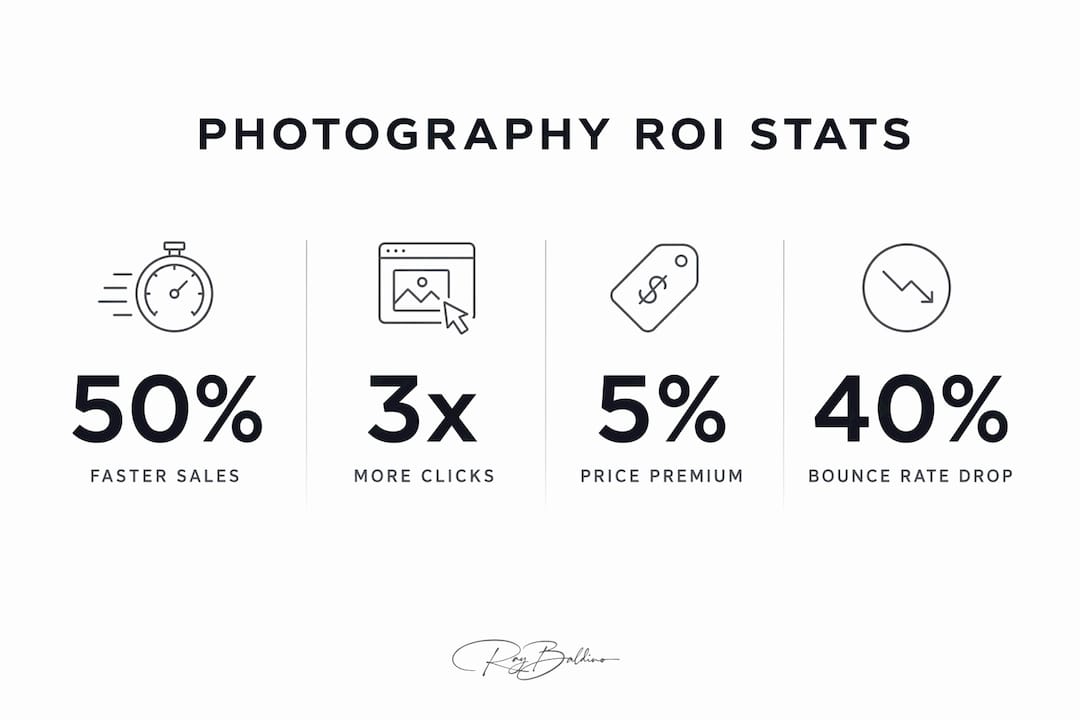
Professional photography also correlates with a 3–5% price premium over standard photos without reducing sell-through rate. On a $40,000 vehicle, that premium equals $1,200 to $2,000 in additional gross per unit. Multiply that across 50 or 100 units per month and the math becomes a compelling budget argument.
| Metric | Standard Photos | Professional Photos | Difference |
|---|---|---|---|
| Avg. days to turn | 30–45 days | 18–25 days | 30–50% faster |
| Sale price vs. market avg. | At or below | 3–5% above | +$1,200–$2,000/unit |
| Floorplan cost exposure | High | Reduced | Lower carrying cost |
| Markdown frequency | Higher | Lower | Margin preserved |
AutoTrader research confirms that listings with professional photos sell 32% faster than those with amateur photos. That finding holds across vehicle segments, from economy sedans to luxury SUVs.
Pro Tip: Calculate your average daily floorplan cost per unit, then multiply by the days saved from faster turn. That number alone often justifies a full month of professional photography services. Present this calculation to your CFO alongside the price premium data for a complete ROI picture.
How do professional car photos build buyer trust and confidence?
Trust is the invisible currency of online vehicle sales. A buyer who does not trust what they see will not submit a lead, book an appointment, or show up to the lot.
Consistent, professional images build buyer trust and reduce concerns about missing vehicle information, which directly increases appointment-to-show and close rates. When a buyer can see every angle, every interior detail, and every notable feature, their uncertainty drops. Lower uncertainty means faster decisions.
Poor or mismatched photos create the opposite effect. A blurry exterior shot paired with no interior photos signals one of two things to a buyer: the vehicle has something to hide, or the dealership does not care enough to present it properly. Either interpretation kills the lead before it starts.
Consider how the digital car buying process has shifted buyer expectations in 2026. Most shoppers complete 60–70% of their purchase research online before ever contacting a dealership. Your listing photos are your showroom floor for that majority. They must do the work a salesperson would do in person.
Key trust signals that professional photography delivers:
- Complete photo sets covering all exterior angles, interior front and rear, cargo area, engine bay, and notable features
- Accurate color rendering under controlled lighting so buyers are not surprised at delivery
- Detail shots of wear points, options, and technology features that justify the asking price
- Consistent presentation across all inventory that signals a professional, reliable dealership brand
AI photo editing tools are increasingly used to maintain consistency across large inventories. They accelerate turnaround without sacrificing the quality standards that build buyer confidence.
What metrics should dealerships track to measure photography ROI?
Measuring the return on vehicle photography investment requires a structured, funnel-based approach. Tracking the right data points at each stage connects photography spend directly to gross profit.
The recommended ROI model follows this sequence:
- VDP views and carousel clicks measure initial photo engagement. Track these within 1–2 weeks of publishing enhanced photos to see immediate impact.
- Time on page indicates buyer engagement depth. Longer sessions signal stronger purchase intent.
- Lead submissions from VDP pages show how many engaged buyers converted to contacts.
- Appointment-to-show rate reveals whether photo quality is setting accurate expectations that hold through the visit.
- Days to turn measures how quickly each unit sold after photos were published.
- Gross profit per unit captures the price premium effect over time.
Dealers should model ROI as incremental VDP engagement leading to incremental leads, then retail closes, and finally floorplan cost savings from faster time to market. This framework gives both marketing managers and CFOs a complete view of photography’s financial impact.
Tracking VDP views, carousel clicks, time on page, and lead submissions within 1–2 weeks of publishing enhanced photos gives dealerships rapid feedback on effectiveness. You do not need to wait a full quarter to see whether the investment is working.
A cohort comparison approach strengthens the analysis. Compare units photographed professionally against a matched group of similar vehicles photographed with standard methods during the same period. Control for make, model, price range, and market conditions. The difference in turn rate and gross profit per unit isolates the photography effect.
Pro Tip: Run an A/B photo test on 10 comparable units. Photograph five with your current process and five with professional photography. Publish both sets simultaneously and track VDP views, leads, and days to turn over 30 days. Integrate the results with your DMS sales data for a clean, defensible ROI calculation you can present to ownership.
Key takeaways
Professional car photography delivers measurable dealership ROI through faster inventory turn, higher sale prices, and stronger buyer engagement at every stage of the online sales funnel.
| Point | Details |
|---|---|
| Photo quality drives clicks | Professional photos generate 2–3x more clicks and 40% more VDP views than average images. |
| Faster turn reduces carrying costs | Vehicles with 20+ professional photos sell 30–50% faster, cutting floorplan exposure daily. |
| Price premiums protect gross | Professional photography correlates with 3–5% higher sale prices without reducing sell-through. |
| Trust accelerates conversion | Complete, consistent photo sets reduce buyer uncertainty and improve appointment-to-close rates. |
| Track the full funnel | Measure VDP views, lead submissions, days to turn, and gross profit per unit to quantify ROI accurately. |
What 35 years behind the lens taught me about dealership photography
Most dealers I speak with treat photography as a line item to minimize. They budget for it last, rush it, and then wonder why their inventory sits longer than the market average. That thinking is the single most expensive mistake in dealership marketing.
I have photographed vehicles for over 35 years, with work appearing on more than 550 magazine covers. What I know from that experience is this: buyers respond to light, angle, and detail in ways that are not random. They are predictable. A vehicle photographed with disciplined lighting and deliberate composition communicates value before a single word of copy is read.
The dealers who understand this treat photography as a sales tool, not a documentation task. They invest in consistent, high-quality imagery across their entire inventory and they see the results in their turn reports. The ones who cut corners on photos then spend money on price reductions to move aging inventory. The math never works in their favor.
Emerging AI editing workflows are genuinely useful for maintaining consistency at scale. But they do not replace the foundational skill of capturing the right image in the first place. A well-constructed photo edited efficiently is the goal. A poorly constructed photo processed quickly is still a liability.
My advice to every dealership owner reading this: look at your current VDP photos as a buyer would. If you would not feel confident purchasing based on what you see, your buyers will not either. Fix that before you spend another dollar on paid search or social media advertising.
— Ray Baldino
How Baldinoautomotive helps dealerships maximize photography ROI
Baldinoautomotive brings over 35 years of professional automotive photography experience directly to dealership inventory programs. Ray Baldino’s approach combines controlled lighting, disciplined composition, and technical precision to produce images that perform at every stage of the sales funnel.
Baldinoautomotive’s dealership services are built around the metrics that matter: faster turn, stronger price realization, and consistent visual presentation across your entire inventory. Whether you manage a luxury franchise or a high-volume used-car operation, the studio’s professional dealership photography process is designed to deliver images that move units. Learn more about how automotive photography works and what a professional session delivers for your dealership’s bottom line.
FAQ
What is car photography ROI for a dealership?
Car photography ROI is the net financial gain from professional vehicle images, calculated by comparing increased revenue from faster sales and higher prices against the cost of photography. Dealers measure it through VDP engagement, days to turn, and gross profit per unit.
How many photos does a dealership listing need?
Listings with 20 or more professional photos sell 30–50% faster than those with fewer than 10 photos, according to Cars.com data. A complete set should cover all exterior angles, interior views, cargo area, engine bay, and key feature details.
How quickly can dealerships see results from better photos?
Dealers can track meaningful changes in VDP views, carousel clicks, and lead submissions within 1–2 weeks of publishing enhanced photos. Days-to-turn improvements typically become visible within the first 30-day sales cycle.
Do professional photos actually increase sale prices?
Professional photography correlates with a 3–5% price premium over standard photos without reducing sell-through rate. On a $40,000 vehicle, that translates to $1,200 to $2,000 in additional gross per unit.
How do dealerships measure the ROI of vehicle photography accurately?
The most reliable method is a cohort comparison: photograph a matched group of similar vehicles professionally and compare their turn rate, lead volume, and gross profit against units photographed with standard methods during the same period. Integrate results with your DMS for a clean calculation.
Recommended
- Hire an Automotive Photographer for Your Dealership
- How to Create Dealership Vehicle Listing Photos That Sell

